Alright, let’s talk about something I get asked all the time as a 5-person outdoor spa supplier: Can you use our 5-person outdoor spa in saltwater? I get it—people love the idea of hot tubbing right by the ocean, or maybe they live in a spot where their well water’s naturally super salty, and they want to cut down on chemical costs. But there’s a lot of misinformation out there, so let’s break this down like we’re chatting over a coffee (or a cold beer, no judgment) instead of a stuffy sales brochure. 5 Person Outdoor Spa

First off, let’s get one thing straight: Not all hot tubs are built the same. Our 5-person outdoor spa is designed for fresh water, sure—but that doesn’t mean it can’t handle salt. It’s all about how you use it, and what parts of the spa actually touch the water. Let’s start with why saltwater is different. When you add salt to water (usually with a saltwater chlorine generator, or SWG, which is the most common way to turn salt into chlorine for spas), the water’s salinity is around 3,000–5,000 parts per million (ppm). That’s way less than ocean water (which is ~35,000 ppm), so it’s milder, but still way saltier than the fresh water we’re used to for regular hot tubs.
Ocean water is a whole different beast—if you plop our spa right next to the beach and fill it with straight seawater, that’s a no-go. But a lot of folks mix it: maybe a 50/50 blend of fresh and ocean water, or they use an SWG to keep the salinity low. Let’s talk about the parts that matter most. Our 5-person outdoor spa has a shell made of durable acrylic—wait, acrylic is actually pretty resistant to mild saltwater, right? Yeah, as long as you rinse it off after use and keep up with the water chemistry. But the real weak spots? The metal components. Things like the heater, the jet pumps, the pipe fittings, even the screws holding the spa together. Salt eats metal, plain and simple. That’s why if you’re planning to use saltwater in our 5-person outdoor spa, you need to make sure those metal parts are either stainless steel (316 grade, specifically—not 304, which is cheaper and rusts faster) or plastic.
Here’s the thing about our spas: Most of the 5-person outdoor spas we sell come with 316 stainless steel heaters and pumps as standard now, because that’s the spec we landed on after years of testing. Early on, we had some customers try using saltwater in our older models with 304 steel, and they came back with rusted heaters that failed in a few months. So we updated every 5-person outdoor spa line to 316 SS across the board. That’s a game-changer, because 316 is engineered to handle mild salt exposure—way better than regular steel. But that doesn’t mean it’s invincible.
Another big one: The spa’s cover. Wait, why does the cover matter? Because if you’re using saltwater, even a little bit of salt residue on the cover can get into the water when it rains, or when you add fresh water to top it off. But more importantly, if you leave saltwater in the spa for weeks on end without draining and refilling, the salinity can creep up, and that’s when you start getting corrosion on the smaller parts, like the jet internals. I’ve seen it happen with a buddy of mine who has a 5-person outdoor spa in Florida—he tried to skip draining it every 3 months like we recommend, and the jet nozzles started to corrode, making them spin weird. Nothing a quick replacement fixed, but it was avoidable.
Let’s address the big myth: “Saltwater is better for your skin.” Yeah, saltwater has some skin-soothing properties, but only when it’s the right salinity. If your spa’s salinity is too high, it’ll actually dry out your skin, or even irritate cuts. And since we’re a spa supplier, we care about user experience—so if you’re using saltwater, you still need to test the pH and alkalinity like you would with fresh water. Saltwater systems add chlorine, but they don’t replace the need for proper water balance. If your pH is off, the salt can become more corrosive, even to 316 steel. I can’t tell you how many times I’ve had a customer say “my salt spa is breaking down” and it turns out they were testing salt levels but ignoring pH. That’s the #1 mistake people make.
Now, what about if you live by the ocean and want to fill your 5-person outdoor spa with seawater directly? Let’s crunch the numbers. Seawater is ~35,000 ppm salt—way higher than the 5,000 ppm max we recommend for our 5-person outdoor spa. Even with a 50/50 mix, that’s 17,500 ppm, which is too high. The metal parts won’t handle that long-term, and the acrylic might start to get cloudy over time because of the higher mineral content. So yeah, you can dilute it with fresh water to get down to 3,000–5,000 ppm, but that’s extra work. Most people opt for an SWG, which is way easier—you just add a bag of sodium chloride (the same kind you use for your saltwater dishwasher, or water softener) and let the generator do the work. No mixing ocean water, no hassle.
Wait, let’s talk maintenance, because that’s where people slip up. For our 5-person outdoor spa, if you’re using fresh water, we recommend draining and refilling every 3–4 months, testing chemicals weekly. If you’re using saltwater, it’s the same schedule, but you also need to:
- Rinse the spa’s shell and cover with fresh water every time you use it (especially if you’re in a coastal area with salt spray in the air). That salt spray can settle on the spa and find its way into the water, upping the salinity over time.
- Test salinity levels monthly to make sure they don’t go over 5,000 ppm. Most SWGs have a built-in tester, but it’s good to have a separate strip too—cheap insurance.
- Flush the plumbing every 6 months, even with our 5-person outdoor spa. Salt can leave deposits in the pipes that restrict water flow, which makes the heater work harder and can lead to overheating. We sell a specific flush solution for saltwater spas that takes 30 minutes, and it’s worth every penny to avoid part replacements.
I want to be real with you—we don’t hide that using saltwater in our 5-person outdoor spa isn’t zero-maintenance. Some competitors will tell you “plug and play, saltwater forever!” and that’s garbage. Every spa needs upkeep, saltwater just adds a couple small, easy steps. But for a lot of customers, the trade-off is worth it: less harsh chlorine smell, softer water, no having to add chlorine granules every week. I’ve had customers in Arizona (where well water is super salty) swear by their saltwater 5-person outdoor spa—they say it saved them hundreds a year on chemicals, and their skin doesn’t get dried out like it did with regular chlorine.
Wait, let’s talk about a specific example. Last year, we sold a 5-person outdoor spa to a guy in San Diego who has a beachfront property. He emailed us a few months in, panicking because his spa’s heater was making a weird noise. We told him to send a video, and turns out he’d been using straight seawater diluted a little, but wasn’t testing pH— it was at 7.8, which is too high for saltwater. The corrosion was starting on the heater’s elements. We walked him through adjusting the pH, and he replaced a small part for like $50 instead of a $500 heater. That’s the kind of thing we help with, which is why being a small spa supplier (wait, no, not too small, but we actually answer our emails) is better than buying from a big box store where you get a 1-800 number that redirects you somewhere else.
Another question I get: Can I use Epsom salt in the spa with saltwater? Epsom salt is magnesium sulfate, not sodium chloride, so it’s a different type of salt. Our 5-person outdoor spa can handle it, but you have to watch the total dissolved solids (TDS) level. SWGs measure salt, not TDS, so adding Epsom salt will mess with the generator’s readings. A lot of people like adding Epsom salts for muscle relief, so if you do that, just make sure you test TDS every month and don’t let it go over 1,500 ppm. Easy enough, but something to keep in mind.
Now, let’s clear up the “outdoor” part too—our 5-person outdoor spa is built to handle weather, but if you’re using saltwater, you need a good cover. Not just any cover— a heavy-duty marine-grade cover. Because saltwater can evaporate, leaving salt crystals on the cover, and if you let that sit, it will eat through the cover’s fabric over time. We recommend the covers we sell as add-ons for our 5-person outdoor spa, because they’re treated to resist salt damage, and they fit perfectly so less salt spray gets inside. It’s a small investment that saves you from having to replace a $300 cover every year.
Wait, what if someone says “I’ll just use a cheap saltwater generator I found online”? Don’t do that. Most generic SWGs aren’t calibrated for the parts in our 5-person outdoor spa. The cheap ones put out too much chlorine, which can damage the acrylic shell over time, or corrode the metal parts faster. We only sell compatible SWGs for our spas, and we can walk you through installing one— it’s not hard, but you want to make sure it’s the right fit.
Let’s sum this up, because I know I rambled a bit (that’s just how I talk). Can a 5-person outdoor spa be used in saltwater? Yes—if you take the right steps. That means:
- Your spa has corrosion-resistant parts (like our 316 stainless steel heaters/pumps, which all our 5-person outdoor spas have).
- You use a mild salinity level (3,000–5,000 ppm, not ocean levels).
- You test water chemistry (pH, alkalinity, salinity) regularly.
- You keep up with maintenance (draining every 3–4 months, flushing plumbing, rinsing off salt residue).
- You use a compatible saltwater system (not a random off-brand one).
It’s not a “set it and forget it” thing, but neither is owning any hot tub. And for what it’s worth, most of our customers who make the switch to saltwater for their 5-person outdoor spa tell us they’d never go back to regular chlorine. The lack of that chemical smell, the softer water, and the lower long-term chemical costs make it totally worth the small extra steps.
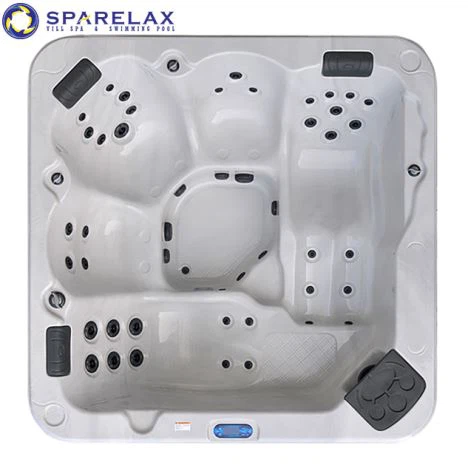
Now, if you’re thinking about making the switch, or you’re in the market for a 5-person outdoor spa and want to ask more about saltwater compatibility, hit us up to chat. We don’t do pushy sales tactics— we’ll tell you straight if a saltwater setup is right for your location and lifestyle, or if fresh water is a better fit. No hidden fine print, no misleading claims.
Big Hot Tub Reference:
- North American Spa & Pool Association. (2022). Saltwater Spa Compatibility and Maintenance Guidelines.
- International Association of Certified Home Inspectors. (2021). Corrosion Risks in Saltwater Hot Tubs.
- Spa Parts Depot. (2023). 316 vs. 304 Stainless Steel for Spa Equipment: Key Differences.
SpaRelax Co., Ltd.
SpaRelax Co., Ltd. is one of the best China 5 person outdoor spa manufacturers and suppliers, and as a professional company, we have productive factory, which is able to produce cheap 5 person outdoor spa with reliable quality. Welcome to wholesale products from us.
Address: Daluxia, Liucun Group,Liucun Village, Longhua Town, Boluo District, Huizhou City, Guangdong,China
E-mail: sales03@spasrelax.com
WebSite: https://www.sparelaxhottub.com/
