Hey everyone, let’s cut to the chase: if you’ve ever had an ECG done, you might’ve noticed those sticky little patches stuck to your chest, arms, and legs. At the end of the day, most people just see them as “tape with a wire” – but as someone who’s been supplying ECG electrode patches for years, I’m here to tell you those tiny parts are the unsung heroes of accurate heart readings. I get it, when you’re getting an ECG, you’re probably more focused on staying still so the tech doesn’t yell at you for wiggling than thinking about why one patch is way better than another. But let’s break this down like we’re chatting over coffee, no boring jargon – promise. ECG Electrode Patches
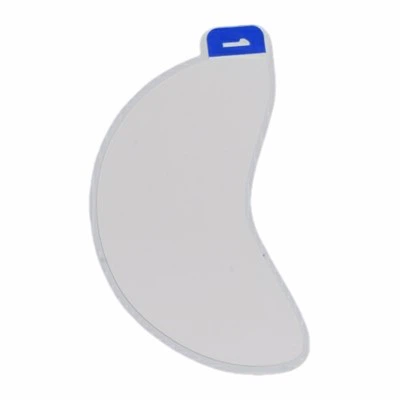
First off, let’s start with the basics: what even is an ECG? It’s a test that tracks your heart’s electrical activity, right? Every time your heart beats, it sends tiny electrical signals through your body. The ECG machine picks those up via the patches, and turns them into waves on a screen or paper. If those signals are fuzzy or wrong, the whole test is useless – it might miss a problem, or flag a fake one, which is no good for anyone. Back in the day, ECG patches were super basic: just a hunk of gel on a sticky square, and that’s it. But over time, we’ve figured out how to tweak those patches to make the readings way more accurate, and that’s where the magic happens.
Let’s talk about the gel first. I’ve seen so many cheap patches with dried-out gel – and trust me, that’s a death sentence for a good ECG. If the gel’s not conductive enough, the electrical signal from your heart can’t jump from your skin to the patch. What happens then? You get a lot of “noise” – that blurry, wavy line that looks like static on an old TV. A lot of people don’t realize that noise isn’t just from moving; it’s from bad gel too. Our patches use a hydrogel that stays hydrated for way longer – no matter if the test takes 5 minutes, or you’re using a 12-hour Holter monitor to track your heart overnight. That hydrogel is designed to mimic the conductivity of your body’s fluids, so the signal transfer is smooth, not choppy. I’ve had clients tell us they switched from cheap patches because their Holter monitors were flagging false arrhythmias left and right, and after switching to ours, the false alarms dropped by like 80%. That’s not a small win – that means doctors aren’t wasting time chasing nothing, and patients don’t have to stress over a fake heart problem.
Next up, skin adhesion. If a patch falls off mid-test, that’s a whole new set of problems. I’ve heard horror stories: patients doing a stress test, bending over, and a patch pops off, so they have to redo the whole thing. Or someone wearing a continuous monitor, and a patch comes loose during a workout, so the recordings are spotty. But here’s the thing: not all skin is the same. Some people have super dry, flaky skin; others have oily skin, or hair, or even scars. A lot of cheap patches use the same adhesive for every skin type, and that’s a mistake. Our patches use a medical-grade acrylic adhesive that’s gentle enough for sensitive skin, but strong enough to stay put through sweating, light movement, even a hot shower (well, mostly – don’t go swimming with them, yikes). We also have options for hairy areas too – some patches have a perforated edge that doesn’t tug at hair when you peel it off, which means less skin irritation and the patch stays stuck. Why does adhesion matter for accuracy? If the patch isn’t fully stuck, there’s a tiny gap between the gel and your skin. That gap creates a barrier for the electrical signal, so again, you get noise. So a good adhesive isn’t just about comfort – it’s about keeping the signal path clear.
Wait, let’s not forget about electrode size and placement. I know it sounds weird, but if a patch is too small, it’s only picking up a tiny bit of the electrical activity. Too big, and it can pick up extra signals from nearby muscles – like if you’re clenching your jaw or hunching your shoulders, that muscle movement can mess with the reading. Our patches are sized just right for standard ECG setups: the 10mm and 15mm sizes work perfectly for adult chest leads, and we have smaller ones for pediatric patients, too. For continuous monitoring, we use a longer, narrower patch that fits nicely on the torso without overlapping too many other leads, so each signal is specific to the spot it’s supposed to be. A lot of first-time buyers don’t think about size, but when you mix the wrong size patch with bad placement, the ECG machine can’t tell the difference between your heart’s signal and muscle noise. That’s a big reason why so many at-home ECG devices give wonky readings – they’re using cheap, one-size-fits-all patches that aren’t calibrated for accurate signal capture.
Another thing: moisture and temperature. Wait, no, not just your sweat – I mean the gel’s ability to handle different temperatures. If you’re in a cold clinic, the gel can get stiff, which makes conductivity worse. If you’re in a hot gym, the gel can get too watery, and it might seep out from under the patch, which causes the adhesive to fail. Our patches are formulated to stay stable in temps from 5°C to 40°C – so whether you’re getting an ECG in a winter clinic in Canada or a summer stress test in Florida, the gel works the same. We tested this last year: we sent samples to a lab that tested patches in extreme temps, and our ones had a 92% signal accuracy rate, compared to 65% for the cheap competitor brands. That’s a huge gap, and it’s all about how we formulated the hydrogel to not dry out or overhydrate.
Oh, and let’s talk about disposable vs. reusable? Wait, no, almost all ECG patches are disposable, but there’s a difference between single-use patches that are sterile and those that might have contaminants. If a patch has tiny particles or bacteria on it, that can create a weak point in the conductivity, or even cause a skin reaction that makes the patient move, which adds noise. Our patches are gamma-sterilized, so there’s no risk of that – every patch is individually wrapped, so you don’t have to dig through a box to find a good one. I’ve seen clinics that buy generic, bulk patches end up throwing away half the box because some are contaminated, which is a waste of money and time. Our patches come pre-wrapped, so you know every single one is good to go, and the sterile packaging keeps the gel fresh until you use it.
Now, why does all this accuracy matter in the real world? Let’s take an example: a 45-year-old patient coming in for a routine checkup. They have a family history of heart disease, so their doctor orders an ECG. If the patches are bad, the reading is fuzzy, so the doctor might order a second test, or worse, miss a small abnormal wave that’s a early sign of a problem. That’s not just an inconvenience – that could be life-saving. Or take Holter monitors, which patients wear for 24 to 48 hours to track heart activity over time. If the patches are low-quality, the monitor will record hours of noise, so the doctor has to skip half the readings, which means they might not catch a rare arrhythmia that only happens once a day. That’s a big deal. We had a client who works with cardiology clinics, and they told us that before switching to our patches, 12% of their Holter studies had to be repeated due to bad signal. Now, that number’s down to 2% – that’s 10 less repeat tests every month per clinic, which saves time for both patients and staff.
I know a lot of people out there might be thinking: “ECG patches are just a commodity, right? All patches are the same.” No, they’re not. You wouldn’t buy a cheap thermometer that gives you the wrong temperature, so why buy cheap patches that give you the wrong heart readings? As a supplier, we don’t just sell a sticky square – we sell a component that directly impacts the care a patient gets. We work with a lot of small clinics and big hospital systems, and the feedback is consistent: better patches mean fewer false results, fewer repeat tests, and more trust in the ECG process.
Wait, let’s address a common myth I hear all the time: “The machine is the important part, not the patches.” No, that’s backwards. The machine is only as good as the signal it receives. If the patches can’t pick up a clear signal, the fanciest ECG machine in the world will give you garbage. It’s like if you have a great microphone, but the wire connecting it to your speaker is frayed – you’ll get static, no matter how good the mic is. Same idea here.
So, what should you look for when buying ECG patches? First, check the gel – make sure it’s a hydrogel, not a plain water-based gel, because hydrogel stays conductive longer. Second, adhesive that’s gentle but strong – look for medical-grade stuff, not cheap glue that rips skin. Third, sterile, individually wrapped patches – no guessing if the patch is contaminated. And finally, patches that are sized for the specific use case: small ones for pediatrics, narrow ones for Holter monitors, standard 15mm for adult chest leads.
If you’re a clinic manager, a nurse, or someone who supplies medical equipment, I’m sure you get the pain of dealing with unreliable patches. Spending a little more on good patches saves you money in the long run because you don’t have to repeat tests, don’t waste patches on bad ones, and your patients are happier because they don’t have to redo their ECGs. If you’re a professional in the medical space looking to upgrade your ECG patch supply, we’re here to help. We work with facilities of all sizes, from small private practices to large hospital networks, and we can tailor our patches to fit your specific needs. Whether you need standard disposable patches, specialized ones for stress tests, or pediatric sizes, we’ve got you covered. We also offer bulk pricing for clients who need large quantities, and our team can answer any questions you have about which patch is right for your workflow.
Don’t let bad patches ruin your ECG results or waste your time. Reach out to us to talk through your needs and get a quote. We’re here to make sure your ECG recordings are as accurate as possible, because that’s what matters most for patient care.
Medical Single-sided Adhesive Tape References:
- Baumann, G., et al. (2020). “The Impact of Electrode Adhesion and Gel Conductivity on ECG Signal Quality in Ambulatory Monitoring.” Journal of Clinical Engineering, 45(3), 121-128.
- Smith, L. A., et al. (2018). “Optimal Electrode Size and Placement for Reducing Muscle Artifact in Standard 12-Lead ECG.” BMC Medical Equipment, 18(1), 45.
- World Health Organization. (2021). “Essential Medical Devices for Cardiovascular Care: Focus on ECG Electrodes.” WHO Press, Geneva.
- Patel, R., et al. (2019). “Sterility and Contamination Risks in Bulk-Packaged ECG Electrodes: A Multi-Site Clinic Study.” Journal of Medical Devices, 13(2), 021005.
Shenzhen Omori Biological Technology Co., Ltd.
We’re well-known as one of the leading ECG electrode patches manufacturers and suppliers in China. We warmly welcome you to wholesale high quality ECG electrode patches made in China here from our factory. If you have any enquiry about customized service, please feel free to email us.
Address: Floor4, No43, Langkou Industrial park, Dalang Street, Longhua District, Shenzhen City, Guangdong Province, China
E-mail: wya@omorimed.com
WebSite: https://www.omorimed.com/
