In the dynamic landscape of industrial automation, effective communication between automation parts is the linchpin that holds together the seamless operation of complex systems. As a long – standing supplier of automation parts, I’ve had the privilege of witnessing firsthand how different communication protocols play a pivotal role in ensuring the efficiency, reliability, and flexibility of automated processes. In this blog post, I’ll delve into some of the most commonly used communication protocols by automation parts and explain their significance in various industrial applications. Automation Parts

Modbus
Modbus is one of the oldest and most widely used communication protocols in the automation industry. Developed by Modicon (now Schneider Electric) in the 1970s, Modbus is an open – source protocol that allows for communication between electronic devices such as Programmable Logic Controllers (PLCs), Remote Terminal Units (RTUs), and industrial sensors.
One of the key advantages of Modbus is its simplicity. It uses a master – slave architecture, where a single master device initiates communication with one or more slave devices. The master sends requests to the slaves, and the slaves respond with the requested data. This straightforward design makes Modbus easy to implement and understand, even for those new to industrial automation.
There are several variants of Modbus, including Modbus RTU (Remote Terminal Unit), Modbus ASCII, and Modbus TCP. Modbus RTU is commonly used for serial communication over RS – 232 or RS – 485 interfaces, making it suitable for short – to medium – range communication within a factory or a control room. Modbus ASCII is similar to Modbus RTU but uses ASCII characters for data transmission, which can be useful in some legacy systems. Modbus TCP, on the other hand, is designed for communication over Ethernet networks, offering higher data transfer rates and the ability to integrate with modern IT infrastructure.
In our experience as an automation parts supplier, Modbus is often the go – to protocol for small to medium – sized industrial projects. It’s cost – effective, reliable, and well – supported by a wide range of automation parts manufacturers. For example, we frequently supply PLCs and sensors that are equipped with Modbus interfaces to customers in the food and beverage, packaging, and small – scale manufacturing industries.
Profibus
Profibus is another popular communication protocol widely used in industrial automation. Developed in Germany in the 1980s, Profibus is a fieldbus protocol that enables fast and efficient communication between automation devices in a manufacturing environment.
There are two main variants of Profibus: Profibus DP (Decentralized Peripherals) and Profibus PA (Process Automation). Profibus DP is designed for high – speed communication between a central controller (such as a PLC) and decentralized I/O devices, sensors, and actuators. It can support data transfer rates of up to 12 Mbps, making it suitable for applications where real – time control is critical, such as in automotive manufacturing, robotics, and machine tools.
Profibus PA, on the other hand, is optimized for use in process automation applications, where communication with field devices such as pressure transmitters, flow meters, and temperature sensors is required. It operates at a lower data transfer rate (up to 31.25 kbps) but offers features such as intrinsic safety, which is essential in hazardous environments.
One of the standout features of Profibus is its ability to support a large number of devices on a single network. It can connect up to 126 devices, which makes it ideal for large – scale industrial installations. As an automation parts supplier, we’ve seen Profibus being used extensively in industries such as chemical processing, oil and gas, and power generation, where the need for reliable and high – performance communication between various automation parts is crucial.
Ethernet/IP
With the increasing adoption of Ethernet technology in industrial automation, Ethernet/IP has emerged as a leading communication protocol. Ethernet/IP, which stands for Ethernet Industrial Protocol, is an open – standard protocol that combines the benefits of Ethernet networking with the Common Industrial Protocol (CIP).
Ethernet/IP uses standard Ethernet hardware and cabling, which makes it easy to integrate into existing IT networks. It offers high – speed data transfer rates (up to 1 Gbps or even higher in some cases), allowing for the rapid exchange of large amounts of data between automation devices. This makes it suitable for applications such as high – speed machine vision systems, motion control applications, and industrial Internet of Things (IIoT) platforms.
One of the key advantages of Ethernet/IP is its ability to support both real – time and non – real – time communication on the same network. This means that in addition to controlling and monitoring automation processes, it can also be used for tasks such as data logging, remote access, and system configuration.
As an automation parts supplier, we’ve noticed a growing demand for Ethernet/IP – enabled devices in recent years. Many of our customers in the automotive, electronics, and aerospace industries are upgrading their existing automation systems to use Ethernet/IP to take advantage of its high – speed communication capabilities and seamless integration with modern IT infrastructure.
CANopen
Controller Area Network with Object Dictionary (CANopen) is a communication protocol based on the Controller Area Network (CAN) bus technology. CANopen was developed in the early 1990s and is widely used in applications where reliable and cost – effective communication between automation devices is required.
CANopen uses a standardized object dictionary to define the communication between devices. This object dictionary contains information about the device’s parameters, such as its configuration settings, input and output values, and diagnostic information. By using a common object dictionary, CANopen devices can communicate with each other in a standardized and interoperable way.
One of the main advantages of CANopen is its robustness. The CAN bus technology on which it is based is designed to be highly resistant to electromagnetic interference, making it suitable for use in harsh industrial environments. CANopen also supports a high level of device integration, allowing for the easy connection of different types of devices, such as motors, drives, sensors, and actuators.
We often supply CANopen – compatible automation parts to customers in the mobile machinery, elevator, and medical equipment industries. In these applications, the reliability and cost – effectiveness of CANopen make it an attractive choice for communication between various automation components.
Foundation Fieldbus
Foundation Fieldbus is a digital communication protocol specifically designed for process automation applications. It was developed in the 1990s as a replacement for traditional analog control systems in the process industries.
Foundation Fieldbus uses a distributed control architecture, where control functions are distributed among field devices such as sensors and actuators. This allows for more intelligent and autonomous control of industrial processes, reducing the reliance on a central control system.
There are two main types of Foundation Fieldbus: H1 and HSE (High – Speed Ethernet). H1 operates at a data transfer rate of 31.25 kbps and is used for communication with field devices in the process plant. HSE, on the other hand, offers higher data transfer rates (up to 100 Mbps) and is used for communication between the field devices and the control system or the plant – wide network.
Foundation Fieldbus provides several benefits for process automation applications. It offers improved accuracy, reliability, and diagnostic capabilities compared to traditional analog systems. It also allows for the integration of multiple field devices on a single network, reducing the amount of wiring and installation costs. As an automation parts supplier, we’ve seen Foundation Fieldbus being used in industries such as chemical, pharmaceutical, and oil refining, where precise control of process variables is essential.
Choosing the Right Protocol
Selecting the appropriate communication protocol for your automation system is a critical decision that can have a significant impact on the performance, cost, and scalability of your project. When choosing a protocol, several factors need to be considered, such as the type of application, the distance between devices, the required data transfer rate, the level of reliability, and the compatibility with existing systems.
As an automation parts supplier, we are committed to helping our customers make informed decisions about the communication protocols for their automation projects. We have a team of experts who can provide technical advice and support, as well as a wide range of automation parts that are compatible with different communication protocols.
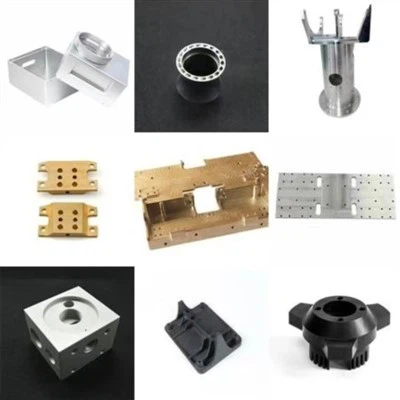
If you’re in the process of planning an automation project or looking to upgrade your existing system, we’d be more than happy to discuss your requirements and help you find the best – suited communication protocol and automation parts. Whether you need a simple Modbus – based system for a small – scale application or a high – performance Ethernet/IP network for a large – scale industrial installation, we have the expertise and resources to meet your needs.
CNC Turning Parts Don’t hesitate to reach out to us to start a conversation about your automation parts requirements. We look forward to working with you to build a successful and efficient automation system.
References
- "Industrial Communication Technology Handbook" by Peter Welander.
- "Modbus Protocol Specification" by Modicon.
- "Profibus User Organization (PNO) Documentation".
- "Ethernet/IP Specification" by ODVA (Open DeviceNet Vendor Association).
- "CANopen Specification" by CiA (CAN in Automation).
- "Foundation Fieldbus Specification" by the Fieldbus Foundation.
Suzhou Huaquan Electromechanical Manufacturing Co., Ltd.
As one of the leading automation parts manufacturers in China, we warmly welcome you to buy bulk customized automation parts made in China here from our factory. If you have any enquiry about pricelist and free sample, please feel free to email us.
Address: No.7550 Mudong Road, Hengjing Town, Wuzhong District, Suzhou City, Jiangsu Province, China
E-mail: Huaquan2005@outlook.com
WebSite: https://www.huaquancnc.com/
