Hey there, fiber fans and industry folks! Let’s cut to the chase—if you’re in textiles, apparel, or even home goods, you’ve probably heard someone drop “solid polyester staple fiber” in a convo, and maybe you’re like, “Wait, what’s the actual definition here? I thought polyester was just polyester?” As a supplier who’s been messing with this stuff for over a decade, I’m gonna break it down like we’re chatting over a coffee (or a quick fiber sample pass, let’s be real). Solid Polyester Staple Fiber

First off, let’s ditch the jargon for a sec. “Solid” here doesn’t mean it’s made of solid rock (obvi) or super heavy. It’s not the hollow core stuff you see in cheap stuffing for pillows or winter coats—you know, the kind that compacts after one wash. This is a dense, uniform fiber with no hollow center, which changes everything for how it’s used. And “staple fiber” vs. the other polyester stuff you might know, like filament? Filament is long, continuous strands for stuff like sewing thread or woven fabrics. Staple is short, cut into lengths (usually 38mm to 150mm, depending on what it’s for)—think the fibers that get spun into yarn, like cotton or wool, but made of polyester.
So putting it together: Solid polyester staple fiber (let’s just call it solid PSF from here on, ‘cause no one wants to type that out every time) is a man-made fiber made from purified polyethylene terephthalate (PET) polymer, extruded into continuous strands, cooled, stretched to boost strength, cut into short, uniform lengths, and solidified with no internal hollow core. That’s the textbook version, but let’s get into the real stuff—why does the “solid” part matter?
Let’s start with the polymer base. PET is the same plastic in soda bottles, right? But when we make solid PSF, we’re not just melting down old bottles (though some recycled versions exist—we do that too, for eco-conscious clients). We’re using virgin PET or recycled PET that’s processed to be super pure, no impurities that would make the fiber weak or uneven. The extrusion step is key here: if you’re making hollow PSF, there’s a tiny air hole running down the center to make it lighter or more insulating, but solid? No hole. That means the fiber’s entire cross-section is polyester, so it’s denser, has better cohesion when spun into yarn, and holds its shape way better.
Wait, let’s test that logic with an example. If you’re making a high-quality fleece jacket, the kind that doesn’t pill after six washes? Solid PSF is what you want. Hollow PSF might be softer at first, but that air hole makes it prone to breaking, so the fabric gets fuzzy and falls apart fast. For stuffing a plush toy? Wait, some plush use hollow, but if you want a toy that doesn’t go flat after a month of snuggles? Solid PSF is the move. We supply both, but when folks ask for “solid,” it’s almost always for durability and performance.
Another big point: staple length. Solid PSF isn’t cut to random lengths. We tailor the cut to the end use. Short staple (38mm-51mm) is for blending with cotton to make denim or woven shirting—blending adds strength and wrinkle resistance. Long staple (64mm-150mm) is for spinning soft, yarn-like fabrics, even for carpets! Solid PSF carpet is way more stain-resistant and holds up to foot traffic way better than nylon or hollow polyester. Oh, and it’s resistant to mildew, which is a win for basements or outdoor patio rugs.
Now, let’s get into what solid PSF isn’t. A lot of folks mix it up with “modified polyester staple fiber,” which has additives to make it flame-retardant or UV-resistant. No, solid just refers to the core structure. It’s also not the same as microfiber, which is a super fine filament fiber for cleaning cloths. Solid PSF can be regular denier (thickness) or high denier, depending on the product. Wait, denier is just how heavy a 9,000-meter strand is—higher denier means thicker fiber, good for heavy-duty stuff like canvas or workwear. Lower denier is for soft, intimate apparel.
Let’s talk about our side of things, ‘cause I’m a supplier, not just a guy who reads textbooks. When we make solid PSF, we have to control every step. If the extrusion is off, the strands won’t be uniform, and when you cut them, some will be too short or too long, which messes up the yarn spinning. If we don’t stretch the fibers enough, they’ll be weak and break easily during processing. We test every batch: check the denier, the length uniformity, the tensile strength (how much it can stretch before breaking), and even the dye uptake—solid PSF takes dye really evenly, which is why it’s great for bright, consistent colors in apparel.
Why do clients choose solid PSF over other fibers? Let’s list the perks that come up most: first, durability. We’ve had a client who makes upholstery fabric tell us their solid PSF blend lasts 3x longer than 100% cotton. Second, cost-effectiveness. It’s cheaper than wool or silk, and way more consistent in quality, so less waste during manufacturing. Third, versatility. You can blend it with almost any natural or synthetic fiber—cotton, wool, acrylic, even linen—to boost performance. Fourth, eco-friendly options. We make solid PSF from 100% recycled PET (think soda bottles, water jugs) for clients who want sustainable products without sacrificing quality.
Wait, let’s bust a common myth: some people think polyester is all plastic and bad. But solid PSF is recyclable too—after a product made with solid PSF is done, it can be melted down and turned into new fiber or even new plastic products. That’s a big deal for brands trying to hit their sustainability goals. We’ve had a big apparel company reach out last year ‘cause they needed a fiber that’s both high-performance and recyclable, and solid PSF checked all their boxes.
Let’s get specific with applications so you get the full pic. Apparel: activewear (since it’s stretchy and wicks moisture—wait, no, wait, solid PSF itself doesn’t wick, but it can be treated with a coating, but the base fiber is strong), jeans, sweaters, intimate apparel. Home goods: upholstery, carpets, rugs, pillow stuffing, bed linens. Industrial stuff: workwear, geotextiles (for road construction, to prevent soil erosion), even filter fabrics. Oh, and plush toys—like I said earlier, the kind that stays puffy for years instead of going flat.
Now, let’s clarify the “solid” part one more time, ‘cause that’s the key differentiator. A lot of suppliers will try to pass off hollow PSF as solid, but at our shop, we cut corners on quality to make sure it’s 100% solid core. We do a simple test to check: take a fiber, look at it under a magnifying glass. You can see the cross-section—no tiny hole. That’s the solid stuff. If you don’t see that hole, it’s not solid, and it’s not gonna perform like one. So when you’re sourcing solid PSF, ask for that cross-section check. It’s a quick way to know you’re getting the real deal.
Another thing: melting point. Solid PSF has a higher melting point than hollow PSF, right? That’s important for things that get hot—like ironing clothes made with it, or using it in industrial applications where heat is a factor. We’ve had a client who makes fire-resistant workwear ask for solid PSF ‘cause it can handle higher temperatures without melting, whereas hollow would shrink or melt way too fast.
Now, let’s talk about how this ties into our role as a supplier. We don’t just ship generic solid PSF—we work with clients to customize the fiber. Need a specific length for blending with cotton? We can do that. Need a recycled version with 50% or 100% post-consumer PET? We have that. Need a high denier for heavy-duty carpeting? We’ve got it. We even do custom colors, though most clients dye the fabric themselves, so we usually supply natural white or off-white fiber. We also provide sample packs for clients to test before placing a big order—no use committing to a huge shipment if you don’t like the fiber’s feel or performance.
Wait, let’s wrap this up so it’s not just a list of facts. The definition of solid polyester staple fiber, at the end of the day, isn’t just the textbook definition—it’s a fiber that’s reliable, durable, versatile, and tailored to meet whatever end use a client has. It’s not a one-size-fits-all product, which is why being a good supplier means knowing how to adjust it to fit your client’s needs. If you’re someone who’s been struggling to find the right fiber for your next product—whether it’s a new line of plush toys, upholstery that doesn’t wear out, or activewear that holds up to workouts—solid PSF is probably what you need.
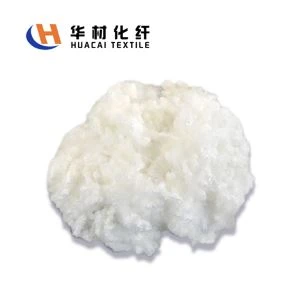
If you’re ready to test some samples or place an order, hit us up. We’re here to answer questions, troubleshoot, and make sure you get exactly what you need. No hidden fees, no gimmicks—just solid PSF, quality service, and the kind of product that’ll make your end customers happy.
Hollow Polyester Staple Fiber References
- Textile Institute. (2021). Polyester Staple Fiber: Properties and Applications. Textile Progress, 53(3), 1-45.
- US Environmental Protection Agency. (2022). Recycled Plastics to Textile Fibers: A Guide for Manufacturers. EPA Sustainable Materials Management Program.
- Patel, R. (2019). “Performance Differences Between Solid and Hollow Polyester Staple Fibers.” Journal of Industrial Textiles, 48(6), 892-907.
- International Organization for Standardization. (2020). ISO 18900: Textiles – Polyester Staple Fibres – Specification. ISO.
- Textile World Magazine. (2023). The Rise of Sustainable Polyester Staple Fibers in Apparel and Home Goods. Textile World, 173(2), 22-27.
Huacai Group
Huacai Group is well-known as one of the leading solid polyester staple fiber manufacturers and suppliers in China, featured by quality products and good service. Please feel free to buy bulk solid polyester staple fiber at competitive price from our factory.
Address: No.188 Zhenyang Road, Qingyang Town, Jiangyin City, Jiangsu Province, China
E-mail: sales@huacaifiber.com
WebSite: https://www.huacaifiber.com/
