If you’ve walked past a factory floor in the last 10 years, you’ve probably seen something that didn’t look like it belonged 20 years ago: robot arms welding car frames, conveyor systems sorting packages faster than a human could blink, or a packaging line that never stops for a coffee break. As someone who sells automation equipment, I get asked this question all the time: does this stuff actually make teams more productive, or is it just a fancy toy that makes investors excited? The short answer? It’s way more than a toy—if you use it right. Let’s break this down from both what we’ve seen with clients and the actual data that backs it up. Automation Equipment
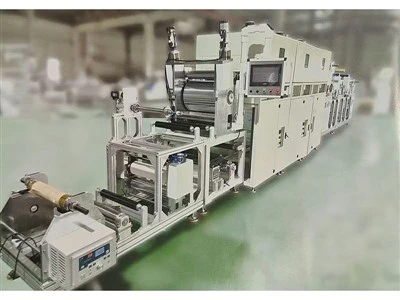
First, let’s clear up a common myth: automation doesn’t replace workers—it changes what they do. I had a client last year, a small snack food manufacturer, who was struggling to keep up with a local grocery chain’s order demands. Their production line had 8 people manually filling bags of pretzels, and even with everyone working overtime, they could only crank out 1,200 bags an hour. They were also dealing with tons of wasted product—bags were underfilled or overfilled, so they had to throw almost 10% of each batch away. We installed our automated filling and packaging system, which took over the bagging and sealing work. The same production line now runs with 3 people total, and they put out 2,800 bags an hour. No more 10% waste—they now throw less than 1% away. The best part? The 8 former baggers didn’t lose their jobs. They moved to roles that need more skill: troubleshooting the automated system, adjusting runs for new flavors, and working with the quality team to spot issues before they become problems. That’s productivity not just in numbers, but in making their team better at what humans do best.
Wait, let’s get specific about the numbers because that’s what actually drives businesses. The International Federation of Robotics (IFR) did a study a few years back that found manufacturing lines with automation saw a 15-30% jump in labor productivity on average. But it’s not just manufacturing—we work with logistics clients too. A fulfillment center we supply automated sortation to cut their order processing time by 40% in the first 6 months. Before, workers would spend hours walking between bins to pick items; now, the robots bring the bins right to the picker, so they’re only focusing on grabbing the right item, not walking. That’s the difference between being busy and being productive. Busy is walking 10 miles a shift; productive is turning every minute into actual work that moves an order out the door.
But here’s where a lot of people mess up: they buy automation just because it’s new, not because it solves their specific pain point. I had another client once, a medium-sized electronics company, who bought a big robot arm for their assembly line because a competitor did. Turns out, their product changes a lot—they make 12 different small electronic parts, each with slightly different assembly steps. The robot was programmed for one part, and re-programming it for every new part took more time and cost more than just having a human do it. That robot ended up sitting idle half the time, and they actually saw their productivity drop because they wasted money on something that didn’t fit their needs. So automation isn’t a one-size-fits-all fix. When we work with a client, we don’t just push our most expensive, fancy system. We start by asking: what’s taking up your time? What’s costing you money? Is it waste? Slow changeovers? worker burnout from repetitive tasks? Then we build a solution that targets that exact issue.
Another big productivity win with automation: consistency. Humans get tired, distracted, bored. If you’re doing the same task 8 hours a day—like tightening a screw on a medical device, or labeling a pharmaceutical bottle—mistakes happen. A study from the Society for Human Resource Management (SHRM) found that repetitive tasks lead to a 30% drop in accuracy after just 4 hours of work. Automated systems don’t have that problem. They do the exact same task the exact same way, every single time, no matter how long they run. For a medical device client, that meant they used to have to test every 10th product to make sure the screws were tight, because humans sometimes missed. Now, the automated screwdriving system has a 99.9% accuracy rate, so they only have to test 1 in 100, which cuts their quality control time in half. That’s productivity—turning time you’re wasting on rework or extra tests into time you can spend growing the business.
Let’s talk about a common concern: cost. A lot of small business owners look at an automated system and think “we can’t afford that.” But here’s the thing—most automation pays for itself in 1-2 years, sometimes less. Let’s go back to that snack food client I mentioned earlier. They spent $85,000 on our system. Before, they were paying 4 people overtime at $25 an hour, plus $1,200 a month in wasted product. After installing the system, they cut overtime costs by 75% (since they only need 1 person on the line instead of 4), and wasted product dropped to $100 a month. They saved about $4,000 a month right there, so they paid off the system in less than 2 years. And since then, they’ve grown their business 25% because they can make more product to sell. That’s not just productivity—it’s growth.
I’ll be honest, it’s not all perfect. Automation does have limits. If your business is seasonal, and you only need 3 months of extra production a year, an automated system might not make sense right now, because you’d be paying for it to sit idle 9 months of the year. And if you’re not willing to train your team to work with the new equipment, it’ll fail. We work with every client to set up training sessions—we don’t just drop the system off and leave. A lot of clients think their workers won’t want to learn, but the opposite is true. No one likes doing a task that’s repetitive and makes their hands sore or their eyes tired. When we taught the snack food team to run the new system, they were excited—they got to do more interesting work, and they didn’t have to stand for 8 hours filling bags anymore. Turnover on that line dropped by 60% in the first year, too. Lower turnover means less time hiring and training new people, which is a huge productivity win all its own.
So when people ask me “can automation equipment improve productivity?” I tell them—yes, but only if you do it right. It’s not about replacing people, it’s about giving them tools to do their best work. It’s about cutting waste, making processes consistent, and freeing up your team to focus on the parts of the business that actually grow it—like customer service, product development, and sales. At the end of the day, the best automation is the kind that fits your business, not the trendiest one.

If you’re tired of dealing with slow production, wasted product, or burnt-out workers, let’s chat. We can walk through your floor, see what’s holding you back, and put together a plan that actually works for you. No sales pitches, no jargon—just straight talk about how automation can make your business better.
Laboratory Equipment References
International Federation of Robotics. (2022). World Robotics Report: Industrial Robots.
Society for Human Resource Management. (2021). Repetitive Task Fatigue and Workplace Accuracy.
Dongguan Innate Intelligent Technology Co., Ltd.
With abundant experience, we are one of the most professional automation equipment manufacturers in China. With a professional production team, we are able to meet the needs of the majority of our customers. Please feel free to buy advanced automation equipment made in China here from our factory. Customized orders are welcome.
Address: Room 201, Building 4, No. 92, Fenghuang Road, Dalingshan Town, Dongguan City, Guangdong Province
E-mail: 13316631159@163.com
WebSite: https://www.getinnater.com/
