Yo, folks! I’m a supplier of non-magnetic drill collars, and I’ve been getting heaps of questions lately about whether there are differences in non-magnetic drill collars for different types of rock formations. So, I thought I’d sit down and write this blog to give you my take on it. Non-Magnetic Drill Collars

Alright, first off, let’s talk about what non-magnetic drill collars are. They’re a key part of the drilling setup, especially in the oil and gas industry. Their main job is to provide the weight needed to push the drill bit into the ground, and they’re made of non-magnetic materials because they’re used in directional drilling. This is important because in directional drilling, we use magnetic sensors to figure out the direction of the wellbore, and if the drill collars were magnetic, they’d mess with those sensors big time.
Now, when it comes to different rock formations, there are definitely differences in the non-magnetic drill collars we use. The way I see it, it all boils down to three main factors: rock hardness, abrasiveness, and the drilling environment.
Let’s start with rock hardness. Rocks come in all different levels of hardness, from soft shale to super-hard granite. When we’re drilling through soft rocks, we don’t need as much weight on the drill bit to get it to penetrate. So, we can use lighter non-magnetic drill collars. These lighter collars are easier to handle and can help reduce wear and tear on the drilling equipment.
On the other hand, when we’re dealing with hard rocks, we need more weight to break through. That means using heavier non-magnetic drill collars. Heavier collars can withstand the high axial loads that come with drilling through hard rock. They also help keep the drill bit stable, which is crucial for accurate drilling. For example, if we’re drilling in a granite formation, we’ll use a set of really beefy drill collars to get the job done.
Next up is abrasiveness. Some rocks are really abrasive, like sandstone. When the drill bit and drill collars are in contact with abrasive rocks, they can wear down quickly. So, for abrasive rock formations, we need non-magnetic drill collars that are highly resistant to wear.
We use special materials and coatings on the drill collars to increase their abrasion resistance. For instance, we might use a high-nickel alloy for the collar body, which is tough and can withstand the abrasive action of the rock. And we can apply a hard-facing coating on the external surface of the collar. This coating acts like a shield, protecting the collar from the sharp edges of the abrasive rock particles.
The drilling environment also plays a huge role. In some cases, we’re drilling in deep wells where the temperature and pressure are extremely high. Other times, we’re drilling in harsh chemical environments, like those with high levels of hydrogen sulfide.
For high-temperature and high-pressure environments, we need non-magnetic drill collars that can handle these extreme conditions. We use materials with high thermal stability and strength. These materials can maintain their properties even when exposed to high temperatures and pressures for long periods.
In chemical environments, corrosion is a big concern. So, we use non-magnetic drill collars made from corrosion-resistant materials. Stainless steel is a popular choice because it’s resistant to many types of chemical corrosion. We can also perform special treatments on the collars to further enhance their corrosion resistance.
Another thing to consider is the design of the non-magnetic drill collars. Different rock formations may require different collar designs. For example, in some hard rock formations, we might use collars with a larger outer diameter. A larger diameter gives more surface area for the weight to be distributed, which helps in effectively transmitting the load to the drill bit.
In soft rock formations, we can use collars with a smaller outer diameter. This makes the drilling process more efficient as there’s less friction between the collar and the wellbore wall. Also, for some directional drilling in complex rock formations, we use non-magnetic drill collars with special profiles. These profiles are designed to improve the steering ability of the drill string and help us navigate through the rock layers more accurately.
Now, let me tell you about the importance of choosing the right non-magnetic drill collars for different rock formations. If we use the wrong type of collar, it can lead to a whole bunch of problems. For example, if we use a light collar in a hard rock formation, the drill bit won’t have enough weight to penetrate the rock effectively. This can result in slow drilling rates, which means more time and money spent on the project.
On the flip side, if we use a heavy collar in a soft rock formation, it can cause excessive wear on the drill bit and the wellbore wall. This can lead to damage to the equipment and may even cause issues like wellbore instability.
As a supplier of non-magnetic drill collars, I’ve got a wide range of products to suit different rock formations. Whether you’re drilling through soft shale, abrasive sandstone, or hard granite, we’ve got the right collar for you.
We’ve spent years in this industry, doing research and development to come up with the best non-magnetic drill collars. Our team of experts knows all about the different rock formations and can help you choose the most suitable collars for your specific drilling project.
If you’re in the middle of a drilling project or planning one, don’t underestimate the importance of using the right non-magnetic drill collars. It can make a huge difference in the success of your project, saving you time, money, and headaches.
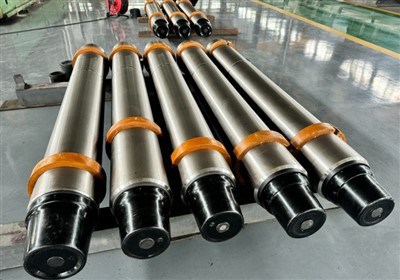
So, if you’re interested in learning more about our non-magnetic drill collars or need some advice on which ones are best for your rock formation, don’t hesitate to get in touch. We’re here to help you out and make sure your drilling project goes as smoothly as possible. Reach out, and let’s have a chat about your needs.
Non-Magnetic Tools for Coal References
- "Drilling Engineering Handbook," by several industry experts
- Technical papers on non-magnetic drill collar technology from leading academic journals
- Case studies from various drilling projects in different rock formations
Shanxi Zhonghe Non-Magnetic Drill Tool Co., Ltd.
Address: No.168 Fenglei Street, Houma City, Linfen City, Shanxi Province, China.
E-mail: lucy@nmdrillcollar.com
WebSite: https://www.zhnmdc.com/
