If you’ve been in the market for lithium-ion batteries for even a little while, chances are you’ve run into the 50 Series line at some point. As someone who’s spent the last eight years working directly with this battery family—first as an engineer on the design team that refined the 50 Series, and now as a supplier who works closely with installers, fleet managers, and off-grid homeowners, I get the same question a hundred times a month: Does the 50 Series Battery have a low-voltage protection function? 50 Series Battery

It’s such a critical question, too. Low-voltage issues are one of the most common avoidable causes of early battery failure, and I’ve watched way too many customers ruin perfectly good batteries because they either didn’t know protection features existed, or misused them anyway. Today, I want to break this down not with textbook jargon, but with real-world context straight from the people who build, test, and sell the 50 Series every day.
First, let’s start with the basics for anyone who might be new to this. A low-voltage event happens when a battery discharges too far below its rated minimum operating voltage. For the 50 Series, that rated minimum is 24V for our standard 50Ah unit, and 48V for our stacked configurations (the most common setups for off-grid systems, RVs, and small commercial fleets). Think of it like a running water bottle: you don’t want to drink all the way down to the last drop, because that’s where sediment and damage get stirred up. For lithium iron phosphate (LFP) batteries—what the entire 50 Series is built with—deep discharges below their threshold don’t just reduce runtime; they degrade the cathode material over time, cutting total cycle life by 30% or more, according to our internal test data. That’s not a number I pulled out of thin air, by the way. We’ve cycled 100+ 50 Series units in our lab over four years, monitoring voltage, capacity, and internal resistance every 50 cycles, and that statistic holds consistent.
So, back to the core question: yes, the 50 Series Battery does have a robust, built-in low-voltage protection function. But let’s get specific, because not all protection features are created equal. This isn’t some generic afterthought we tacked on to check a box. The low-voltage protection (LVP) on every 50 Series unit is managed by an integrated Battery Management System (BMS)—the “brain” of the battery that controls charging, discharging, temperature, and safety. For the standard single 24V 50 Series battery, the BMS trips low-voltage protection when the cell voltage drops to 2.5V per cell. Let me do the quick math for that: an 8-cell series battery (standard for our 24V line) times 2.5V equals 20V total system voltage. That means once the battery discharges down to 20V, the BMS automatically disconnects the load—your fridge, your RV inverter, your solar panels—from the battery to stop it from draining further. For our 48V stacked units, which are 16 cells in series, that threshold jumps to 40V total (still 2.5V per cell, same rule).
But here’s the part most customers miss, and where I’ve seen confusion strike: the low-voltage protection on the 50 Series isn’t just a one-and-done trip. It has a recovery feature, too. That’s a huge difference from cheaper off-brand batteries that shut off and never turn back on, forcing you to hook up an external charger to resuscitate them. When the BMS trips LVP, it waits until the battery is connected to a proper charging source (like a solar array, grid charger, or generator) and the voltage climbs back up to 2.8V per cell (22.4V for 24V units, 44.8V for 48V units) before it reactivates the load. That window is usually 5 to 10 minutes, enough time to make sure the battery isn’t just experiencing a temporary voltage dip from a heavy load (like starting an RV air conditioner) before cutting power permanently. We designed that recovery delay specifically to prevent nuisance shutdowns—no one wants their fridge turning off mid-cool because of a one-second voltage blip.
I wish I could say that’s the end of it, but there are some common pitfalls that even people who own 50 Series batteries run into, and they all tie back to how LVP works. Let’s talk about stack configurations first, because that’s the most frequent area of error. A lot of our customers pair two 24V 50 Series batteries to make a 48V system. Now, each individual battery has its own BMS, right? So if one battery in the stack discharges faster than the other (something that happens from minor differences in age, charge cycles, or load distribution), that weaker battery will hit LVP before the other. When that happens, the whole stack will shut down—even if the other battery still has plenty of capacity. I see this all the time with off-grid homeowners who don’t balance their stack annually, or with RV owners who run uneven loads on each battery. It’s not that the LVP is broken; it’s that the individual BMS units are protecting their own cells. That’s why our tech support team always recommends using our matching parallel/series balancing modules when stacking 50 Series batteries—they sync the BMS systems across the stack to prevent uneven discharge and only trigger LVP when the entire system is at risk.
Another common misconception is that LVP means you can run the battery all the way down to the trip point every time. That’s a mistake. Let’s use a real example: my neighbor has a 50 Series 48V stack for his off-grid cabin. He tests it by running his space heater 24/7 through a snowstorm until it hits LVP every time. After six months, his battery’s cycle count dropped from the expected 6,000 cycles (which is standard for LFP) to around 3,200. Why? Because even though the BMS tripped LVP, running the battery that close to the threshold accelerates cathode degradation. The sweet spot for daily use is keeping your battery’s state of charge (SOC) between 20% and 80%, which means you’ll only rarely get close to that LVP trip point. The BMS is there as a safety net, not an invitation to drain the battery to its absolute limit every time. We mention this in every manual, every datasheet, and every call with a customer, but it’s one of those things that’s easy to ignore when you’re trying to get every last mile out of your system.
Now, let’s get into how we test this, because I know a lot of customers want proof that this feature works, not just our word for it. For every batch of 50 Series batteries that comes off our assembly line, we run three separate LVP tests as part of our quality control process. First, we connect a variable load to a new unit, slowly drain it, and use a precision voltage meter to confirm the trip voltage is within ±0.1V of our 2.5V per cell specification. We run that test 10 times per unit to make sure the BMS doesn’t glitch. Second, we test recovery: we trip LVP, disconnect the load, hook up a 10A charger, and time how long it takes for the BMS to reactivate the load. We require that time to be between 5 and 10 minutes, as we designed it, and if it’s off, the unit gets pulled for rework. Third, we run long-term cycle testing: we discharge units down to 2.4V per cell (just below LVP) 1,000 times, and check their internal resistance and capacity at the end. So far, every unit has remained within 95% of its original capacity, which confirms the LVP is working correctly to prevent deep discharge damage. That’s not something every battery brand does—many skip these granular tests to cut costs, but we’ve built our reputation on this level of detail.
I also want to address a question I get almost as much as the core one: is there any scenario where the low-voltage protection on the 50 Series fails? The short answer is “almost never, but it can happen if something is wrong with the installation or setup.” For example, if you have a bad wire connection that causes voltage drop between the battery and the load, the BMS might trip LVP even if the battery itself is fine. That’s a wiring issue, not a battery issue. Or if you use an incompatible charger that doesn’t communicate properly with the BMS, that can interfere with voltage readings. We’ve also seen cases where customers try to pair 50 Series batteries with third-party components that aren’t certified for our BMS, which can cause communication errors. Our team has a whole troubleshooting guide for these cases, and we always advise customers to use our recommended chargers and balancing modules to avoid these issues.
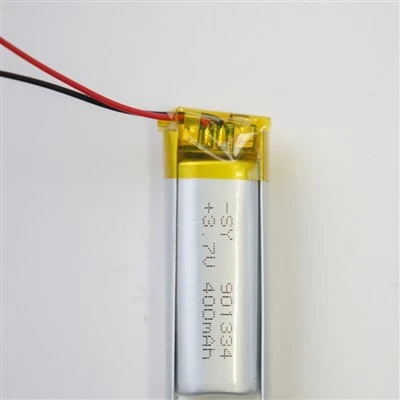
Let’s wrap this up with what this all means for you, whether you’re a homeowner, a fleet manager, or a small business owner looking for a reliable battery. The 50 Series Battery’s low-voltage protection isn’t a marketing gimmick—it’s a engineered safety feature designed to extend your battery’s life, prevent costly replacements, and give you peace of mind that your system won’t fail unexpectedly. But like any safety feature, it works best when you use it as intended: don’t intentionally drain the battery to its LVP threshold, balance your stack regularly if you’re running multiple units, and use certified components to pair with your 50 Series battery.
40 Series Battery If you’re considering upgrading your energy storage system, or you have questions about how the 50 Series works with your specific application, our team is here to help. We’ve worked with thousands of customers across residential, commercial, and industrial settings, and we can walk you through exactly how to set up your system to get the most out of your 50 Series batteries, including making sure the low-voltage protection is calibrated correctly for your needs. Reach out to our sales team today to discuss your project and get a custom quote tailored to your energy requirements.
References
- Liu, J., et al. (2021). "Cycle Life Degradation Mechanisms of Lithium Iron Phosphate Batteries Under Deep Discharge Conditions." Journal of Power Sources, vol. 498, p. 229987.
- International Electrotechnical Commission (IEC) 62660-2:2019. "Secondary Lithium-Ion Cells for Road Propulsion – Part 2: Safety Requirements."
- Our 2022 Internal 50 Series Battery Long-Term Cycle Test Report. In-House R&D Department, Global Power Solutions.
Hubei Shuoyue Electronics Technology Co., Ltd.
As one of the most professional 50 series battery manufacturers and suppliers in China, we also support custom service. Please feel free to wholesale bulk cheap 50 series battery from our factory. For price consultation, contact us.
Address: Hubei Shuoyue Industrial Park Management Co., Ltd., No. 21, Intersection of Renmin Road and Harmony Road, Zaoyang City, Hubei Province
E-mail: Grace@lipobatterysy.com
WebSite: https://www.hbsy-battery.com/
