If you’ve ever stepped foot on a construction site, a mining yard, a gravel pit, or even a large agricultural operation, you’ve seen them: those powerful, blocky machines with the giant front bucket that move mountains of material faster than a dozen workers with shovels. As someone who’s spent the last 12 years supplying wheel loaders to operators across North America, I can tell you that not all wheel loaders are created equal. Picking the wrong model isn’t just a minor inconvenience—it can delay project timelines, drain your fuel budget, and even lead to avoidable wear and tear that cuts a machine’s lifespan in half. Today, I want to break down the most common wheel loader models, explain what each is designed for, and give you the clarity you need to pick the right one for your work. Wheel Loader
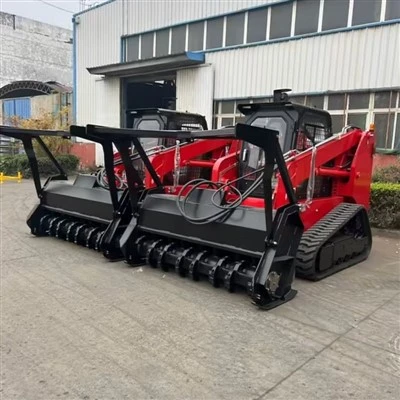
First, let’s start with the basics: what makes a wheel loader different from other construction equipment? Unlike track loaders, which use steel or rubber tracks for better traction on soft, muddy terrain, wheel loaders ride on pneumatic tires, giving them faster travel speeds over pavement, roads, or compacted ground. They also feature a hydraulically powered lift arm and front bucket, with attachments that can be swapped in minutes to handle everything from digging to lifting to material handling. The key to choosing the right model is matching its size, power, and capabilities to your specific tasks—and that’s where most operators go wrong.
Let’s start with the most ubiquitous model in the industry: the Compact Wheel Loader. If you work on small residential construction jobs, landscaping, urban renovation projects, or tight-space sites where a full-sized machine can’t maneuver, this is your workhorse. Compact wheel loaders (often called “compact utility loaders” or CULs) range from 1,000 to 5,000 pounds of operating weight, with engines that produce 20 to 100 horsepower. What makes them ideal for tight spaces is their slim frame—most are under 6 feet wide, so they can fit through standard doorways, navigate sidewalks, and squeeze between two-story homes without damaging nearby structures. They’re also lighter than full-sized models, so they don’t leave deep ruts on driveways or finished pavement.
For example, last year we supplied a pair of 70-horsepower compact wheel loaders to a landscaping company in Minneapolis that was redoing 12 backyard patios in a single summer. Before, they’d been using a small track loader that took twice as long to move gravel and topsoil between yards, and they often got stuck in the soft lawn areas after rain. The compact wheel loaders, on the other hand, moved at up to 20 mph on the street between job sites, didn’t tear up the lawn, and had the lifting power to haul 1.5 cubic yards of mulch per bucket—enough to cut their weekly job time by a full day. The only catch with compact models is they don’t have the power for heavy-duty tasks like loading 30-ton dump trucks or digging deep foundations. For that, you need to move up to the next class: Mid-Size Wheel Loaders.
Mid-size wheel loaders are the workhorses of most general construction and industrial operations, ranging from 5,000 to 25,000 pounds of operating weight, with engines producing 100 to 300 horsepower, and bucket capacities from 2 to 5 cubic yards. These are the machines you’ll see at highway construction sites, commercial building projects, and municipal yards. They strike a perfect balance between power, maneuverability, and speed: they’re strong enough to load standard 10- to 25-ton dump trucks, but still agile enough to navigate around cranes and other large equipment on job sites. Most mid-size models also have a wide range of compatible attachments—forks, grapples, snow blowers, even sweepers—so they can switch tasks from moving demolition debris to clearing winter roads without needing separate machines.
Last winter, a municipal public works department in Ohio worked with us to replace three aging mid-size wheel loaders that had seen over 10,000 hours each. Their old models could only handle 3-cubic-yard buckets, so clearing side streets during a snowstorm took 12 hours a night. The new mid-size loaders we supplied have 4.5-cubic-yard buckets, and their higher torque meant they could push deeper drifts without getting bogged down. The department reported cutting their snow-clearing time by 3 hours per night, which freed up crews for other maintenance tasks earlier in the season. The limit of mid-size models, though, is when you’re moving massive volumes of material for mining, large-scale excavation, or heavy aggregate operations. For that, you need Full-Size Wheel Loaders.
Full-size wheel loaders are the heavy hitters, built for the toughest, most high-volume operations. These machines weigh anywhere from 25,000 to over 150,000 pounds, with engines that produce 300 to 1,000 horsepower, and bucket capacities ranging from 5 cubic yards up to 15 cubic yards or more. The largest full-size models, often called “mining wheel loaders,” can even handle buckets that hold 40+ cubic yards, enough to load a 200-ton dump truck in just a few passes. What sets these apart from mid-size models is their sheer power: they have reinforced lift arms, heavy-duty axles, and hydraulic systems built to sustain thousands of hours of heavy work without breaking down. They also have high travel speeds, often up to 35 mph, which makes moving material across large mine sites or aggregate yards far faster than using smaller equipment.
I’ll never forget a story from a gravel mine in Wyoming I worked with five years ago. Their old full-size loaders were taking 10 minutes to load a single 100-ton dump truck, and their maintenance costs were over $80,000 a year in repairs and part replacements. We supplied them with two new full-size loaders with 12-cubic-yard buckets, and they cut the load time per truck to 3 minutes. Their maintenance costs dropped by nearly 40% because the new models had advanced filtration systems that reduced wear on the engine and hydraulics, and they added a telematics system that alerts operators to small issues before they become big, expensive repairs. The only downside to full-size wheel loaders? They’re expensive to operate, can’t fit on most small job sites, and require specialized training to operate safely. If you don’t have the volume of material to justify their cost, they’ll sit idle most of the time and cost you more in fuel and maintenance than they’re worth.
Now, beyond these three core size classes, there are a couple of specialized wheel loader models that have grown in popularity over the last decade, and they’re worth mentioning because they solve specific pain points that standard models can’t. The first is the Tool Carrier Wheel Loader. These are a variation of mid-size and full-size loaders built specifically for quick attachment changes. Instead of a standard bucket linkage, they have a universal quick coupler system that lets you swap forks, grapples, bale grabs, or even breakers in under two minutes, no extra tools required. They’re perfect for yards that handle a mix of materials—like lumber yards, recycling centers, or distribution warehouses—where you need to switch between lifting pallets of lumber, moving scrap metal, and loading truck beds throughout the day.
Another specialized model is the Articulated Wheel Loader. Wait, you might be thinking: aren’t all wheel loaders articulated? No, actually. Standard wheel loaders have a rigid frame, meaning the entire machine turns by steering the front tires. Articulated wheel loaders, by contrast, have a hinge in the middle of the frame, so the front and rear sections can bend at an angle, just like an articulated dump truck. This gives them a much tighter turning radius, making them ideal for work on very uneven terrain, like construction sites with muddy ground, construction in mountainous areas, or loading docks with limited space. Articulated loaders also distribute weight more evenly, so they’re less likely to sink in soft ground than rigid-frame models of the same size.
That said, articulated loaders do have drawbacks: because of their hinged frame, they have slightly less lifting capacity than rigid-frame models of the same weight class, and they can be less stable on steep slopes if not operated correctly. We always advise customers to weigh their needs: if you’re working on flat, paved construction sites, a rigid-frame mid-size loader will give you better lifting power for the same cost. If you’re working on a muddy, uneven site where turning around a full dump truck would take 10 minutes, an articulated model is worth the premium.
A common question I get from new operators is whether to go for a radial-lift or a vertical-lift wheel loader, regardless of size class. These are two different arm designs, not separate models, but they’re critical to choosing the right machine. Radial-lift loaders have arms that curve outward as they lift, which means they have better reach at mid-height, making them ideal for digging and moving loose material. Vertical-lift loaders, on the other hand, have arms that lift straight up, giving them more lifting height at the top of the lift—perfect for loading material into high dump truck beds or stacking materials in piles. For example, if you’re loading a 10-foot-tall semi-truck, a vertical-lift loader will let you dump the bucket at the top without needing to raise the truck bed. If you’re digging a trench and moving dirt a short distance, a radial-lift loader will give you better forward reach.
Over the years, I’ve seen too many operators make the mistake of buying the biggest, most powerful wheel loader they can afford, only to realize it’s overkill for their job. I had a customer in Texas a few years back who bought a $300,000 full-size wheel loader for a small 10-unit apartment renovation project. He complained for months that the machine was too big to maneuver in the narrow streets, burned through 10 gallons of fuel an hour, and cost twice as much to maintain as the compact model he could have used instead. By the time he sold it to a local mining company, he’d lost nearly $50,000 in depreciation.
The key to choosing the right wheel loader is to ask yourself three simple questions: What’s the maximum amount of material I need to move per hour? What’s the typical space I have to work in? What attachments will I need most often? If you need to move less than 5 cubic yards of material per hour on small, tight sites, a compact wheel loader is your best bet. If you’re moving 5 to 20 cubic yards per hour on general construction sites, a mid-size loader will serve you well. If you’re moving 20+ cubic yards per hour for mining, large aggregate operations, or highway construction, a full-size model is the way to go. And if you need to switch attachments constantly, look for a tool carrier model, or if you work on soft, uneven terrain, consider an articulated loader.
At the end of the day, wheel loaders are an investment, not a purchase. You want a machine that will hold up to 8,000 to 12,000 hours of work over 10 to 15 years, without costing you a fortune in downtime and repairs. As a supplier, I’ve worked with hundreds of operators over the years, and the ones who stick with the right model for their work are the ones who are most profitable.
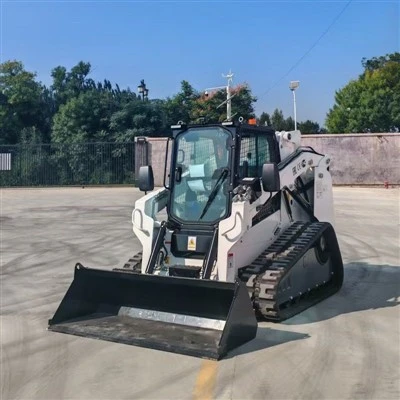
If you’re in the market for a wheel loader, or you’re not sure which model is right for your specific projects, I’m here to help. Whether you’re a small landscaping company looking for your first loader, a municipal crew upgrading your winter maintenance fleet, or a large construction firm needing heavy-duty equipment for a major highway project, we can walk through your needs, compare model specs, and find the solution that fits your budget and workflow. Don’t end up with a machine that’s too big, too small, or the wrong type for your work—reach out to us today to discuss your requirements, and we’ll help you make a decision that will pay off for years to come.
Excavator References
- Caterpillar Inc. (2023). Wheel Loader Product Line Overview. Peoria, IL: Caterpillar Inc.
- Deere & Company. (2022). Compact, Mid-Size, and Full-Size Wheel Loader Specifications. Moline, IL: Deere & Company.
- International Organization for Standardization (ISO). (2021). Earth-Moving Machinery – Wheel Loaders – Terminology and Commercial Specifications (ISO 7131:2021). Geneva, Switzerland: ISO.
- Construction Equipment Association (CEA). (2023). Wheel Loader Market Trends and Operational Best Practices. London, UK: CEA.
- Volvo Construction Equipment. (2022). Specialized Wheel Loaders: Tool Carriers and Articulated Models Guide. Brussels, Belgium: Volvo CE.
Shandong Feisite Machinery Co., Ltd.
As one of the most professional wheel loader manufacturers and suppliers in China, we’re featured by quality products and good service. Please rest assured to buy cheap wheel loader made in China here and get quotation from our factory. Customized orders are welcome.
Address: 100 meters south of Zengfusi Village, Mihe Town, Qingzhou City, Shandong Province
E-mail: Wpeng19911103@qq.com
WebSite: https://www.shandongfeisite.com/
