Hey there, let’s cut to the chase if you’ve ever stared at a massive crepe paper jumbo roll and thought, “Just how wide is that thing anyway?” I’m Jake, part of the team at our crepe paper supply shop—we’ve been shipping these rolls to craft studios, floral designers, party planners, and packaging folks for 6+ years now, so I’ve fielded this exact question like, a hundred times. No stuffy jargon here, just real talk from someone who moves these rolls out the door every week. Crepe Paper Jumbo Roll

First off, let’s stop confusing “jumbo roll” with your average roll of crepe paper you grab at the dollar store. That tiny craft roll is like a candy bar compared to the jumbo’s whole chocolate bar. The width of a crepe paper jumbo roll isn’t random—there are standard sizes, and we stick to the most commonly used ones because changing widths just creates waste for our customers. Most of our go-to rolls are either 48 inches or 60 inches wide. Wait, hold on—let’s translate that to metric too, ’cause we ship to places that use centimeters, right? That’s about 122 cm and 152 cm, respectively. But don’t take that as the only sizes; we do custom cuts too, but I’ll get to that later.
Here’s the thing: that width isn’t some arbitrary number. It’s tailored to what people actually use these rolls for. Floral designers love the 60-inch roll because when they’re wrapping giant event backdrops or long garlands, they don’t have to piece together multiple strips (which means no awkward seams showing up in photos or at weddings). Party planners go for 48 inches ’cause it’s the sweet spot for table runners, balloon arch base layers, or wrapping those giant custom banners that don’t need to span an entire ceiling. Packaging teams (we sell a ton to small-batch candle makers and candy brands) use both—48 inches works for wrapping product boxes, and 60 inches if they’re doing custom branded paper that covers more surface area without extra cuts.
Wait, but I know what you’re thinking—why not just roll a whole mile wide? Duh, logistics. These rolls are still paper, so there’s a sweet spot where width equals usability, not just something you can’t lift or store. A 60-inch jumbo is still manageable with two people, whereas a roll wider than that would be impossible to maneuver through a standard warehouse doorway or a delivery truck’s back end. We’ve had a customer once ask for a 72-inch roll for a festival installation, and we had to tell her we could do it, but it’d be 10% more on shipping because it couldn’t fit on our regular roll carts. So standard widths aren’t just about convenience—they keep costs down for you, too.
Now, let’s talk about what makes a crepe paper jumbo different from other big paper rolls. Regular craft paper jumbo rolls are usually thicker, right? Crepe paper has that crinkled texture—stretchy, lightweight, but durable enough. The width? It’s measured from edge to edge of the entire roll’s flat width, not the core. The core is usually 3 inches wide (standard, so it fits on every single roll unwinder out there—another reason we stick to that), so the paper itself sits around that core, and the total width across the paper is the number we’re talking about. I’ve seen people measure the core and call it the roll width, and that’s a rookie mistake. Don’t do that—you’ll end up ordering paper that’s narrower than you need.
Let’s get into the science behind the width, just to make it real. The crepe process itself—when manufacturers stretch the paper before creping—affects how wide the final roll can be, because the stretch rate is consistent. Most crepe paper is stretched 2 to 4 times its original width during production, so if the machine is set to make a jumbo roll that’s 60 inches wide, that means the base paper was stretched to hit that, which keeps the crepe texture even all the way across. If you tried to make a roll way wider, the stretch rate would be uneven, leading to thin spots that tear when you pull the paper. No one wants a giant roll that tears mid-use, trust me. We’ve tested rolls from sketchy suppliers before that had that issue, and it’s a nightmare for our customers.
Now, what about the length paired with the width? Does that matter? Hell yeah, it does. A 48-inch wide roll can be 500 feet long or 1,000 feet long—we offer both, depending on what you need. If you’re a small craft shop that only uses crepe paper for weekly classes, go for the shorter 500-foot roll so it doesn’t get dusty sitting around. If you’re a big floral company doing weddings and events 5 days a week, the 1,000-foot roll saves you from reordering every two months. The width is the base, but the length is what determines how much paper you actually get. I always tell customers to match width to their project, and length to how often they use it.
Wait, let’s bust a myth I hear all the time: “Jumbo rolls are all the same width.” Nah, not at all. We’ve had customers come to us after ordering a roll from a big-box supplier, and it’s 42 inches wide—way narrower than what they need, so they have to buy two rolls and tape them together, which looks garbage. We only stock the standard 48 and 60 inches because we’ve seen that those are the sizes that eliminate that problem. We did a custom order last month for a giant Christmas parade float that needed 70-inch width, but that was a one-off, and we charged a little extra because it required a custom run, and the lead time was 2 weeks instead of 3 days for standard sizes. So unless you have a super specific project, stick to the standards—they’re made for actual use, not just padding a catalog.
What about when you’re cutting the roll down to size? Like, if you need strips for garlands, you don’t have to cut the whole width at once. The jumbo roll’s width is just the maximum you can work with. A 60-inch roll can be cut into two 30-inch strips, or three 20-inch strips, whatever. I’ve had a customer turn a single 60-inch roll into 100+ small paper flowers for a wedding—worked like a charm. The width’s flexibility is why jumbo rolls are such a better deal than buying tiny individual craft rolls. For example, a single craft roll is 2 inches wide and like 8 feet long—our 48-inch, 500-foot roll is the equivalent of 300 of those, and it’s half the cost. That’s the math people care about.
Now, let’s get into the technical stuff for the folks who like the nitty-gritty. The width is measured at ambient temperature and humidity, right? Because crepe paper is absorbent—if it’s too humid, the paper swells a little, so the width might be ¼ inch more; if it’s super dry, it shrinks a tiny bit. We test all our rolls before shipping, so we guarantee the width within ½ inch tolerance, which is industry standard. No one’s gonna get a roll that’s 5 inches off, that’s a scam. We’ve had quality control checks that flip every single roll, measure the edge to edge twice, so our customers don’t have to deal with that garbage.
Also, the width affects how the roll is wound. Tighter winding is better for wider rolls because if you wind a 60-inch roll too loose, it’ll sag, which makes it hard to pull off the unwinder. We wind our rolls at a consistent tension, so even the 60-inch roll stays firm, no sagging, no creases in the paper that you’ll see when you’re decorating. That’s another thing about the standard widths—they’re the ones manufacturers have refined winding processes for, so the paper stays perfect from the core to the edge.
Let me give you a real example. Last year, we had a customer who runs a party rental company. She ordered 10 of our 60-inch, 1,000-foot rolls for a music festival. She said before, she was buying rolls from another supplier that were 54 inches wide—so she had to use two rolls to cover the back of the stage, which meant extra tape, extra time to set up, and she had to bring more rolls just in case. With our 60-inch rolls, she only needed 5, half the number, and the setup time was cut by 3 hours. That’s the real value of getting the width right— it’s not just about the number on the box, it’s about how much easier your job is.
Wait, what if you’re a small business and you’re not sure which width you need? Hit us up, we’ll help. Don’t guess— I’ve seen too many people order the wrong size and end up wasting money. If you’re just starting out, doing small events, go 48 inches. If you’re doing big projects, event backdrops, wholesale, go 60 inches. Custom orders are there if you need something else, but standard is almost always the move.
Let’s wrap this up. The short answer: most crepe paper jumbo rolls you’ll find (and that we sell) are 48 inches (122 cm) or 60 inches (152 cm) wide. They’re standardized for usability, logistics, and to cut down on waste. The width isn’t random—it’s tailored to what people actually use crepe paper for, and paired with the right length, it’s way more cost-effective than tiny craft rolls. Stop overcomplicating it—jumbo rolls are big for a reason, and the width is part of that big, perfect for your projects.
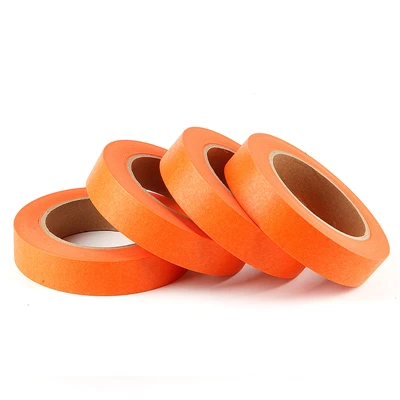
If you’re ready to stock up for your next big project, or just have more questions about widths, lengths, colors, whatever—reach out. We don’t do salesy jargon, we answer your questions straight, and we’ll hook you up with the right size for your needs. No pressure, just good crepe paper that works for you.
Duct Tape References:
- International Paper Association, Crepe Paper Manufacturing Standards, 2022
- Floral Design Supply Association, Jumbo Roll Usage Guidelines, 2023
- Packaging and Converting Industry, Roll Dimension Best Practices, 2021
Yiwu Yubang Adhesive Products Co., Ltd.
As one of the most professional crepe paper jumbo roll manufacturers and suppliers in China, we also support custom service. We warmly welcome you to wholesale high quality crepe paper jumbo roll made in China here from our factory. If you have any enquiry about cooperation, please feel free to email us.
Address: 4th Floor, No. 17 Gantang West Road, Yiting Town, Yiwu City, Jinhua City
E-mail: salesmanager@yubangtape.com
WebSite: https://www.yubang-tape.com/
