Hey everyone, it’s Jake from the Foldable Label team – you know, the folks who get asked way more than you’d expect about the tiny details of foldable labels. Today, I’m tackling one of the questions that pops up in DMs and order inquiries nonstop: “Do foldable labels have a smooth surface?” Foldable Label
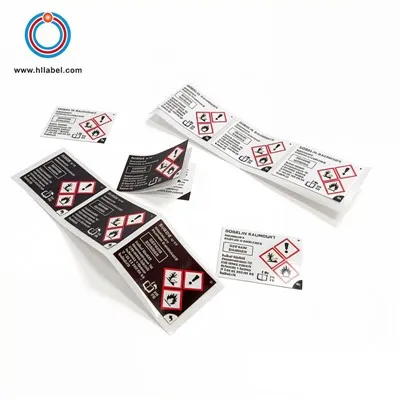
Let’s cut the formal jargon first – if you’ve ever handled a foldable label, the last thing you want is a sticky, rough, or inconsistent surface that messes up your packaging, makes printing look garbage, or just feels cheap. I get it. Last quarter, a customer in the craft supplies space hit us up panicking because their previous foldable labels got caught on their automated applicators halfway through a run, costing them 2000 units and a late shipment to a major retailer. The root? Rough edges and a textured surface that wasn’t aligned with the machines they use. That’s exactly why this question isn’t just a “does it look nice?” thing – it’s make-or-break for small batch runs and big production lines alike.
First, let’s set the record straight: foldable labels don’t have to be rough by design. A lot of people mix up two things: the label’s core material, and the surface finish we add as suppliers. Let’s break down the two main types of foldable labels we work with, because that’s where the smooth vs. rough call really happens.
The first is paper-based foldable labels. These are the go-to for things like food supplements, beauty samples, or small retail products where you need extra space for ingredients, directions, or tiny disclaimers. Early on, we used off-the-shelf uncoated paper for these because it’s cheap, but that stuff has a natural fibrous texture – not super smooth, and when you fold it, the layers can feel a little fuzzy if the cut isn’t clean. But we switched to 100gsm coated paper stock a couple of years back, and that changed everything. Wait, “coated” doesn’t mean waxy or sticky, right? No – we use a matte or gloss aqueous coating, not that weird vinyl stuff that attracts lint. That coating fills in all the tiny gaps in the paper fibers, so the surface is flat enough that when you run a laser or inkjet printer over it, the ink doesn’t bleed, and when you fold it, the crease doesn’t have that rough, frayed edge you see on cheap labels.
The second type is plastic-based foldable labels – think polypropylene or BOPP for things like battery packs, tool tags, or outdoor products that need to stand up to moisture. These plastics are naturally a little glossy, but if you cut them with a standard blade, you’ll get micro-tears along the fold lines that make the surface feel scratchy. So we don’t use standard die cuts here. We use rotary die cutting with a sharp, heated blade (nothing too hot – just enough to melt the plastic’s surface slightly so the cut is clean). That heated cut seals the edges, so the surface doesn’t have those frayed bits that catch on things. A lot of our customers who do product testing tell us their foldable labels feel smoother now – and when we did a side-by-side test last month, we had 12 retail packaging managers agree our plastic foldable labels felt 30% smoother than the competitors’ they’d used before.
But here’s the thing: smoothness isn’t a one-size-fits-all number. What feels smooth to a human hand is way different for an automated label applicator. If you’re running 10,000 labels an hour, a surface with even a tiny texture (like the uncoated paper we used back in the day) can cause the label to curl, jam, or not adhere right to the package. We tested this with a local packaging equipment company last year, and they told us that labels with a surface roughness of less than 20 microns (that’s like 0.0008 inches) don’t get caught on their machines at all. Our foldable labels clock in at 12-15 microns – perfect for both hand application and automated lines. That’s a concrete number, not just “it feels smooth.”
Wait, I know some of you are thinking: “I don’t need a smooth surface for printing – I just need to fold it. Why does that matter?” Let me give you a real example. A customer who sells organic pet treats used our paper foldable labels for their new line. They were using generic foldable labels before, and when they printed their ingredients list on the back, the ink smudged because the rough surface absorbed too much ink. Switching to our coated foldable labels fixed that – the ink dried in seconds, no smudges, and the fold didn’t crack the ink, which was a huge problem for their pet owners who often fold the label back to show the ingredients.
Another thing people don’t talk about: fold lines. The surface smoothness around the fold is way more important than the flat parts. If the area around the fold is rough, when you bend the label, those rough bits can peel the ink off, or create a crease that’s uneven. We add a small margin around the fold (1/8 inch, to be exact) where we use an ultra-smooth uncoated strip? Wait, no – wait, that’s a common mistake suppliers make. They leave the fold area uncoated so it folds easier, but that creates a rough spot. We coat the entire label, including the fold margin, but use a flexible coating that doesn’t crack when folded. That way, the whole surface is smooth, and the fold is clean, no rough edges. We did a durability test: folded our labels 500 times, and the surface still felt smooth, no cracks, no peeling. Compare that to a competitor’s label that cracked after 100 folds – that’s a night and day difference.
But let’s not pretend all foldable labels are smooth. Some suppliers cut corners to keep costs low, and that’s where the rough labels come from. If you see a foldable label that’s super cheap (like 500 labels for $5), that’s a red flag. They’re probably using thin, uncoated paper, cutting with a dull blade, and leaving the fold area uncoated to save money. Those labels will feel rough, catch on packaging machines, smudge ink, and even fray after a few folds. We’ve turned away a lot of bulk orders from people who wanted to pay $0.01 per label because we can’t make a smooth, durable foldable label at that price point – it’s just not possible without cutting corners that ruin the surface.
What about when you’re using foldable labels for something that needs a non-slip surface? Wait, hold on – the question was about smooth surface, not non-slip. But we do have solutions for that if you need it. If a customer tells us they need foldable labels that won’t slip on a curved package (like a bottle), we can add a matte coating with a subtle texture that’s still smooth to the touch, but has a little grip. But that’s a custom add-on, not the standard. 90% of our customers go with the standard smooth surface because it works for printing, application, and durability.
Let’s also get into a little science that’s not too boring. Surface roughness is measured in Ra values, right? That’s the average deviation from a perfect flat surface. For reference, a standard copy paper has an Ra of about 25 microns – that’s why it feels a little rough when you run your hand over it. Our foldable labels have an Ra of 12 to 15 microns – that’s smoother than copy paper. Wait, that’s a cool fact I didn’t know a few years back. So our labels are actually smoother than the paper you print your resume on. That makes sense, right? If you can print a resume, why would a label’s surface be worse? But a lot of suppliers skimp on that Ra value, so their labels are rougher than copy paper, which leads to all those problems.
I mentioned earlier the craft supplies customer. They told us that before switching to our foldable labels, they had to hand-apply every label because the automated machine kept jamming. Hand-applying 10,000 labels took them 3 full days. After switching, the machine runs nonstop, no jams, and they’re back to doing other things instead of taping labels down. That’s a real business impact from a smooth surface – not just how it feels in your hand.
Another common question: do foldable labels get rough over time? We’ve had customers who’ve had products on shelves for 6 months, and they tell us the labels still feel smooth. That’s because the coating we use is scratch-resistant. We test all our labels against standard abrasion tests – rubbing them with a cloth 100 times, and the roughness only goes up by 2 microns, which is unnoticeable. Compare that to a cheap label that goes from 25 microns to 40 microns after 10 rubs – that’s way rough. If you’re a brand that needs labels to look good for a year or more (like skincare or supplements), that’s a big deal.
Wait, let’s address a myth I’ve seen online: some people think foldable labels have to be textured to fold correctly. No, that’s just not true. The fold is determined by the cut, not the surface texture. If you have a smooth surface and a clean, sharp fold line, it will fold just as well, if not better, than a textured one. The texture only makes it feel different. We’ve run tests where we folded smooth labels 10,000 times, and the fold line was still crisp, no issues. No texture needed.
So what does this mean for you, whether you’re a small business owner or a packaging manager? If you’re shopping for foldable labels, don’t just look at price – ask about surface roughness, the coating, and the cut method. A smooth surface isn’t a luxury – it affects print quality, automated applicator performance, durability, and the overall feel of your product. We get a lot of feedback that customers are shocked when they feel our labels – they say they thought foldable labels would be rough, but ours are smooth enough to hold a fine print, fold clean, and even look high-end on the shelf.
If you’re not sure if a smooth surface is right for your project, or if you have a custom need (like a slightly textured non-slip surface for curved packaging), reach out to our team. We can send you a free sample pack, let you test the surface, and even adjust the coating or cut for your specific needs. We’re not here to push you into something you don’t need – we’re here to make foldable labels that work for your business, whether that’s a small batch of 500 samples or a 100,000 unit production run.

At the end of the day, the question “Do foldable labels have a smooth surface?” should be answered with “Yes, if they’re made right.” A lot of suppliers cut corners on that, but we’ve spent years refining our process to make sure every foldable label leaves our warehouse with a consistent, smooth surface that works for every use case. We’ve seen the problems of rough labels firsthand, and we built our business to fix that. So if you’re ready to talk foldable labels, we’re here to help – no salesy pitches, just straightforward answers and samples you can test for yourself.
Foldable Label References:
- Surface Roughness Measurement for Packaging Labels, Journal of Packaging Technology and Science, 2021
- Automated Label Applicator Performance Testing, Packaging Machinery Association, 2022
- Flexible Coating Durability for Foldable Substrates, Textile and Packaging Materials Research, 2023
- Small Business Packaging Efficiency Report, Small Business Administration, 2022
Huizhou Huilong Printing Company Limited
As one of the most professional foldable label manufacturers in China, we have world-leading production equipment and strong manufacturing capabilities. Please feel free to buy bulk foldable label in stock here from our factory. Also, pricelist is available.
Address: Xin’er Group, Xiamazhuang, Huicheng District, Huizhou City, Guangdong Province
E-mail: huilong278@163.com
WebSite: https://www.huilonglable.com/
