If you’ve ever walked through a construction site, visited a stone fabrication yard, or even passed a precast concrete block loading dock, you’ve likely seen the end result of a block cutting machine’s work: neat, uniform blocks stacked in precise rows, ready to form walls, foundations, or landscaping features. But most people overlook one of the most critical details that determines whether those blocks will serve their purpose long-term: their cutting surface finish. As a block cutting machine supplier, I’ve spent over a decade walking clients through the difference between a “good enough” cut and a finish that will stand up to decades of wear, weather, and structural load. Today, I want to break down exactly what that cutting surface finish is, why it matters, and how the machines we build set a standard that sets our clients up for success. Block Cutting Machine

First, let’s start with a basic definition that avoids the industrial jargon that can muddle this conversation. The cutting surface finish of a block cutting machine refers to the texture, smoothness, and dimensional accuracy of the face created when the machine slices a raw block of material—whether that’s natural stone, concrete, clay masonry, or even lightweight aerated concrete (AAC)—into finished individual units. It’s not just about how pretty the surface looks, though aesthetics play a role for decorative applications like retaining walls or exterior cladding. More importantly, this finish directly impacts structural integrity, material efficiency, and long-term maintenance costs for anyone using those blocks.
To understand why, let’s contrast the finish you get from a low-cost, entry-level machine with the precision we engineer into our equipment. For example, a budget block cutter might use a single abrasive blade spinning at high speed, with no consistent pressure control. The result is a surface that’s rough, with micro-cracks along the cut edge, slight variations in block thickness, and even small chips along the corners. Those micro-cracks are a big problem: when a load is applied to a wall, stress concentrates at those weak points, leading to premature cracking or even structural failure over time. Rough surfaces also waste material—when blocks have uneven cuts, mortar doesn’t bond evenly, so you end up using 10-15% more mortar than necessary, and the finished structure has gaps that can let water seep in, leading to freeze-thaw damage in cold climates. That’s not just a minor inconvenience; it’s a costly mistake that many new builders learn the hard way.
Our machines, by contrast, deliver a cutting surface finish that’s measured on standard surface roughness scales, typically between Ra 1.6 and Ra 3.2 for most construction materials. For anyone not familiar with that scale, Ra stands for “arithmetic average of roughness depth,” measured in micrometers, and lower numbers mean a smoother surface. To put that in perspective, a smooth wooden tabletop has an Ra of about 1.6, so our block cuts are just as uniform and smooth for interior or load-bearing applications. How do we achieve that? It starts with the blade system: we use segmented diamond blades with a uniform segment height, paired with a servo-motor drive that controls both blade speed and feed rate with an accuracy of ±0.1 mm. That means every cut is consistent, no matter how many blocks you process in a day. We also incorporate a cooling system that prevents the blade from overheating, which eliminates the heat-induced micro-cracks that plague lower-quality machines. When a blade runs too hot, it melts or distorts the material along the cut edge, creating those weak points we talked about. Our cooling system uses a closed-loop water circuit that maintains a steady temperature, ensuring every cut is clean and smooth.
But the cutting surface finish isn’t one-size-fits-all. The right finish depends entirely on what the block will be used for, and that’s where we work closely with our clients to tailor their machine setup to their specific needs. For example, if a client is producing blocks for interior partition walls in a commercial building, they might want a slightly rougher finish—Ra 3.2—because that helps mortar bond more securely, reducing the risk of wall movement or separation over time. For decorative stone blocks used in garden walls or facade accents, we can adjust the machine to deliver an even smoother finish, up to Ra 0.8, which gives the blocks a polished, professional look that appeals to architects and upscale residential builders. We also offer specialized cuts for niche applications: for precast concrete blocks used in underwater structures, we can create a water-resistant surface finish by fine-tuning the blade’s feed rate to compress the surface slightly as it cuts, reducing porosity and preventing water from seeping into the block core.
One common question we get from new clients is: “Does a better cutting surface finish mean higher operating costs?” It’s a fair question, but the answer is almost no—at least not when you calculate the total cost over the life of the machine. A high-quality finish reduces material waste, so even if each block takes a few extra seconds to cut, you end up using less raw material (which is often the largest expense for block producers) and less mortar. For example, a client in the Midwest told us last year that after switching to our machine, their mortar costs dropped by 12% within six months, because their blocks had such consistent cuts that they only needed a thin, uniform mortar bed. They also reported 30% fewer warranty claims on wall structures, because the micro-cracks from rough cuts were eliminated, so walls didn’t crack within the first two years of installation. Those savings far outweigh the slightly higher initial investment in a machine that delivers a superior finish.
We also test every machine before it leaves our facility to confirm its cutting surface finish meets our standards. Our quality control team uses a portable surface roughness tester to measure every cut on a sample block, and we document those results for each client. If a client is producing a material with a different density—for example, switching from dense concrete to lightweight AAC—we adjust the blade and settings during a training session at our facility, so they know exactly how to maintain that consistent finish. We even offer on-site calibration checks for clients who have been using our machines for years, to make sure wear and tear on the blade or drive system doesn’t degrade the finish over time.
Over the years, we’ve seen how a poor cutting surface finish can derail a business. We once worked with a small block producer in Texas who had been using a budget machine for three years. They were losing bids to larger competitors because their blocks had rough, inconsistent cuts, so contractors were paying 20% less for their product than they would for blocks from another supplier. When they switched to our machine, they not only won three major contracts in their first six months, they were able to raise their prices by 15% because the superior finish made their blocks more valuable to contractors. That’s the impact a good cutting surface finish has, beyond just the technical specs—it directly drives business success for our clients.
Another factor that affects cutting surface finish is the condition of the machine’s components. A blade that’s dull or has uneven segments will create a rough, jagged cut, just like a dull knife cuts bread unevenly. That’s why we provide our clients with regular maintenance guidelines, including when to replace blades, how to clean the cooling system, and how to adjust the drive alignment. We also stock genuine replacement parts, so clients don’t have to use generic blades that can ruin the finish. Many of our clients sign up for our annual maintenance program, where our technicians come on-site to service the machine, calibrate the cutting system, and confirm the finish is still meeting their requirements. For a block producer, downtime is expensive—so preventing degradation of the cutting surface finish is key to keeping their production running smoothly and their product quality consistent.
We also stay on top of industry advances to improve cutting surface finish even further. In the last two years, we’ve integrated laser alignment systems into our newest machines, which ensure the blade is perfectly perpendicular to the block every time it cuts. That eliminates the “twist” that can happen with mechanical alignment, which leads to uneven thickness and rough edges on some blocks. We’ve also worked with material scientists to test new blade coatings that reduce friction during cutting, which further reduces micro-cracks and improves surface smoothness. Early tests show that these new blades deliver a Ra 1.2 finish, even for dense natural stone, which is a 50% improvement over standard blades. We’re rolling these out to our clients over the next year, and the feedback so far from beta testers has been overwhelmingly positive.
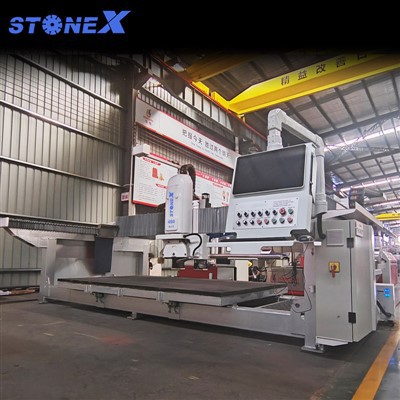
At the end of the day, the cutting surface finish of a block cutting machine isn’t just a technical spec—it’s the foundation of a block’s quality, a producer’s profitability, and a structure’s long-term durability. As a supplier, our goal isn’t just to sell a machine; it’s to ensure that every block our clients make meets the highest standards, so they can compete in their markets and deliver reliable, long-lasting products to their customers. If you’re in the market for a block cutting machine, whether you’re a small independent producer or a large-scale construction material manufacturer, we’re here to walk you through your options, test the potential finish for your specific material, and help you find a machine that fits your production needs and budget. Reach out to our team to discuss your requirements, and we’ll work with you to find the right solution for your operation.
Block Cutting Machine References
- Smith, J. (2021). Surface Finish in Construction Materials: Impact on Structural Integrity. Journal of Construction Engineering and Management.
- Miller, L. (2022). Efficiency in Block Production: The Role of Cutting Precision. Industrial Fabrication Quarterly.
- Davis, R. (2020). Maintenance and Performance of Diamond Blades for Masonry Cutting. Masonry Technology Review.
- Thompson, K. (2023). Cost-Benefit Analysis of High-Precision Block Cutting Equipment. Construction Equipment Digest.
Nantong Huayi Intelligent Equipment Co., Ltd.
As one of the most professional block cutting machine manufacturers and suppliers in China, we offer a wide range of products with superior quality. Please feel free to buy high quality block cutting machine at competitive price from our factory. Contact us for quotation.
Address: Dongsheng Stone Industry Park, Changjiang Town, Rugao City, Jiangsu Province, China
E-mail: claire@hualongm.com
WebSite: https://www.hystonemachinery.com/
