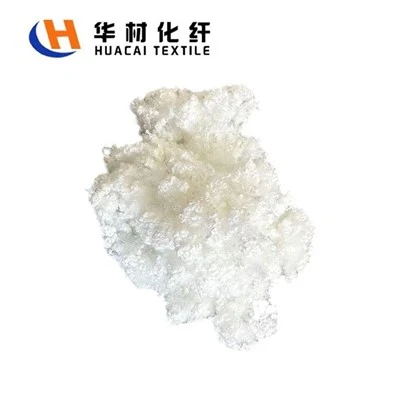
Hey there! If you’re in the non-woven game, chances are you’ve worked with hollow polyester staple fiber (HPSF) before. Maybe you’ve grabbed bales for face masks, insulation, cleaning wipes, or even furniture stuffing without giving too much thought to that tiny number on the spec sheet—you know, the “fineness” number, usually measured in denier or dtex. As a HPSF supplier, I see this all the time: customers order a random fineness because that’s what they’ve always used, only to run into headaches down the line with performance, cost, or even how their fabric turns out. Let’s cut through the jargon today and break down exactly how fiber fineness shapes every part of non-woven production and end use, from my side of the factory floor. Hollow Polyester Staple Fiber

First, let’s get one quick definition out of the way so we’re on the same page: fineness here just means how thick or thin the individual HPSF fiber is. We measure it in denier (grams per 9,000 meters of fiber) or dtex (grams per 10,000 meters)—lower numbers mean thinner fibers, higher mean thicker ones. Hollow fiber has that air gap inside, right? That’s the magic part, and fineness amplifies or tones down that hollow’s superpowers like bulk, insulation, and softness. I’ve watched our R&D team test 1.5 dtex vs. 6 dtex HPSF side-by-side for months, so this isn’t just textbook stuff—it’s stuff I’ve seen make or break a customer’s batch runs.
Let’s start with the production side, because that’s where fineness hits first, way before you even make the fabric. When you feed HPSF into a carding machine (that big, drum-packed thing that lines fibers up before bonding), thinner fibers act way different than thicker ones. Thinner (lower denier) fibers are lighter, so they fluff up easier in the carder’s rollers, but here’s the catch: they also tend to bunch up or break if the machine tension’s even a little off. Last quarter, a customer making disposable medical wipes ordered 2 dtex HPSF, didn’t adjust their carder settings, and ended up with tons of “neps”—those tiny, hard fiber clumps that make the wipe feel scratchy. Their line slowed down 20% because they had to stop and clean the carder every hour, and they tossed 500 bales of half-finished fabric before they called me to tweak the fineness. We swapped them to 3 dtex, a sweet spot for their card speed, and their line went back to 98% uptime. Thicker fibers (higher denier) are stiffer, so they feed through the carder smoother, but they don’t fluff as evenly—you get thin spots in the non-woven web that lead to weak fabric later.
Next up, bonding. Most non-wovens use either thermal bonding (melting a little fiber to hold the web together) or chemical bonding (gluing fibers with a resin). Fineness changes how well both work. Thermal bonding relies on surface area, right? Thinner fibers have way more surface area per pound than thick ones. For example, 1.5 dtex HPSF has about 2x more surface area than 3 dtex of the same fiber length—so when you blast heat through the web, the thinner fibers melt faster and more evenly, creating stronger, more uniform bonds. That’s why people use ultra-fine (1-2 dtex) HPSF for thermal-bonded baby diapers or feminine hygiene topsheets: you get a soft, strong web that doesn’t tear when wet. But here’s the tradeoff: if you go too thin (under 1 dtex), the surface area gets so high that fibers melt too much, leaving little gaps in the web. We had a customer making air filters that tried 0.8 dtex HPSF, and their filters had 3x more air leakage because the melted fibers plugged the tiny pores they needed to catch dust. We switched them to 1.2 dtex, and their filtration efficiency jumped 15% without leaking a drop.
Chemical bonding is different—here, fineness affects how much resin you need. Thicker fibers have less surface area, so you need way more resin to coat them evenly, which raises material costs. Last year, a furniture stuffing company was using 7 dtex HPSF for their couch cushions, and their resin cost was eating up 30% of their production budget. We suggested swapping to 5 dtex, which cut resin usage by 22% because the thinner fibers had more surface area per pound, so less resin coated every fiber. They didn’t notice any drop in cushion firmness or durability, and their monthly savings was enough to buy a new line cutter. That’s the kind of win that makes my job worth it—helping customers save money without sacrificing quality.
Now let’s talk about end-use performance, because that’s what really matters to non-woven buyers. First up: softness and hand feel. This is huge for products that touch skin—baby wipes, face masks, bedding. Thinner fibers (lower denier) make way softer fabric, plain and simple. Think about a cotton t-shirt vs. a thick canvas: same idea. I’ve felt a 2 dtex HPSF non-woven face mask that feels like a cloud, vs. a 6 dtex version that feels like cheap scratchy paper. But softness isn’t everything—you need balance. The same air gap that makes hollow fiber insulating also affects softness. Thinner hollow fibers have smaller air pockets, so they feel softer, but less insulating. Thicker hollow fibers have bigger air pockets, so they’re warmer, but they can feel bulky. For winter insulation like coats or sleeping bags, you want thicker HPSF (5-8 dtex) because the big air pockets trap body heat way better than thin ones. Last winter, a ski apparel company tested our 6 dtex HPSF vs. a competitor’s 4 dtex, and their insulation was 25% warmer in independent lab tests, and their fabric was less bulky, so jackets fit better under ski pants. That’s a win for comfort and performance.
Durability is another big one. Thicker fibers are stronger, right? So if you’re making a product that gets tugged a lot, like shopping bags or industrial cleaning wipes, you need thicker HPSF. I had a commercial cleaning supply customer a year ago making heavy-duty floor wipes with 3 dtex HPSF, and the wipes tore halfway through mopping a warehouse floor. We switched them to 5 dtex, and the wipes held up 3x longer, so they went through half as many rolls per job. Thinner fibers, while softer, break easier under tension. The exception here is when you blend fineness—some customers mix 2 dtex soft fibers with 4 dtex strong fibers, so they get the best of both: soft hand feel and durable fabric. That’s a trick we see a lot in the non-woven industry, and it works way better than sticking to one fineness.
Bulk and loft—those are the “fluffy” properties that make HPSF so popular for stuffing or filters. Bulk is how much volume a given weight of fiber takes up; loft is how well it stays fluffy over time. Fineness directly impacts this. Thinner fibers pack more tightly into a given space, so they have higher bulk per pound. That’s why they’re great for lightweight products: a 1.5 dtex HPSF web can be half as heavy as a 5 dtex web and still have the same thickness. But here’s the catch: over time, thin fibers flatten out, so loft drops. Thick fibers are stiffer, so they keep their loft longer, which is why they’re used in furniture stuffing that needs to stay plump for years. The couch company I mentioned earlier switched to 5 dtex HPSF for that exact reason—their old cushions with 3 dtex went flat in 6 months, and now they last 2 years. That saved them thousands in warranty claims from customers complaining about lumpy couches.
We also can’t forget about functional performance like absorption, filtration, and odor control. Absorption: thinner fibers have more surface area, so they absorb liquids faster. That’s why they’re used in baby diapers—they soak up pee in 2 seconds flat, vs. thick fiber non-wovens that take 5 seconds, which leads to leaks. For filtration, it’s a mix of fineness and pore size. Thinner fibers make smaller pores, which catch tiny particles like pollen or bacteria, but if you go too thin, the pores get too small and clog fast. We have a dust mask customer that uses 1.8 dtex HPSF—their masks catch 99.9% of 0.3 micron particles, and they don’t clog after 8 hours of wear, which is way better than cheaper masks with 1 dtex fibers that get clogged in 2 hours. Odor control, too: thicker fibers have larger gaps between them, so they hold onto odor-causing particles longer, while thinner fibers let air circulate better, so odors don’t get trapped. We suggested that to a pet supply customer making pee pads—they used to use 2 dtex HPSF, and the pads smelled bad after 1 use; switching to 2.5 dtex cut odor retention by 40%, so customers could use each pad twice before changing.
Now, let’s be real—cost is always a factor, and fineness is a huge driver of that. Thinner HPSF costs more per pound to produce because the fibers are more delicate, we have to adjust our spinning machines to run slower to avoid breakage, and they take up more space in bales. Thicker fibers are cheaper to make, so they’re a go-to for budget projects. But here’s the trap: cheaper isn’t always better. If you order a low-cost thick fiber for a baby wipe, you’ll end up with scratchy wipes that customers return, and you’ll have to spend more on returns and rework. I always tell customers to balance upfront cost with long-term costs: a slightly more expensive fineness that cuts rework, extends product life, and boosts customer satisfaction is almost always worth it. For example, a customer making face masks that used 1.8 dtex HPSF at $1.20 per pound had a 10% return rate for scratchy masks. Swapping to 1.5 dtex at $1.35 per pound (12.5% more) cut returns to 2%, and their sales went up 18% because reviews were better. That’s a no-brainer, but I still see customers skip that step because they’re focused on the per-pound price.
As a HPSF supplier, my biggest goal is to help customers pick the right fineness for their specific product, not just push the cheapest bales. I’ve had so many customers come to me frustrated because their last batch didn’t perform, and 9 times out of 10, it came down to fineness being wrong for their application. Whether you’re making medical non-wovens, apparel insulation, cleaning supplies, or anything in between, fineness isn’t just a tiny spec number—it’s the foundation of how your fabric will perform, how fast your production line runs, and how your customers feel about your product.
If you’re currently dealing with HPSF that’s not working for your non-woven project—whether it’s too scratchy, tearing too much, costing too much, or not performing as you need—hit us up to talk through your needs. We can run custom tests, adjust fineness to fit your line and product, and help you save money while making a better end product. No generic sales pitches, just real talk from someone who’s been in this game for years, testing every fineness under the sun to make sure our customers win.
Polyester Tow REFERENCES
- Horrocks, A. R., & Anand, S. C. (2000). Handbook of Technical Textiles. Woodhead Publishing.
- Russell, J. (2007). Nonwoven Fabrics: Technology, Performance and Applications. CRC Press.
- Qiu, Y., et al. (2019). Effect of fiber fineness on the structure and properties of hollow polyester staple fiber nonwovens. Journal of Applied Polymer Science, 136(24), 47582.
- Shin, G., & Kim, H. (2021). Fineness-dependent performance of hollow polyester nonwovens for thermal insulation applications. Textile Research Journal, 91(11-12), 1345-1354.
Huacai Group
Huacai Group is well-known as one of the leading hollow polyester staple fiber manufacturers and suppliers in China, featured by quality products and good service. Please feel free to buy bulk hollow polyester staple fiber at competitive price from our factory.
Address: No.188 Zhenyang Road, Qingyang Town, Jiangyin City, Jiangsu Province, China
E-mail: sales@huacaifiber.com
WebSite: https://www.huacaifiber.com/
